Blue, Maroon, White: The Secret Colour Code Of Indian Passports Nobody Explains
Updated: 24-07-2026 at 12:30 PM


1k


A passport is one of the most vital travel and identity papers issued by the Government of India. It is used for identification purposes and to enable Indian citizens to travel overseas. In addition to enabling foreign travel, a passport is accepted as a valid ID and address proof for many official use cases in India as well.
Many people don't realise that there are different kinds of passports given out to different people in India according to their job and how they plan to use it for travelling abroad. Most Indian citizens have a regular type of passport known as an ordinary passport, but the government also awards an official passport to an eligible person and a diplomatic passport to a person representing India on an official assignment. The eligibility requirements, privileges and instructions for use vary for each type of passport.
It helps applicants identify which passport applies to them and follow the proper application process, understanding these different categories. This article explains different types of passports available in India along with their eligibility, features, benefits, and differences.
Overview Of Types Of Passports In India
The table below highlights the key insights of the government scheme:-
| Particular | Details |
|---|---|
| Issued By | Ministry of External Affairs, Government of India |
| Purpose | International travel and proof of identity and nationality |
| Major Passport Types | Ordinary Passport, Official Passport and Diplomatic Passport |
| Most Common Passport | Ordinary (Blue) Passport |
| Application Mode | Online through Passport Seva Portal with physical verification at Passport Seva Kendra |
| Validity | Generally 10 years for adults (Ordinary Passport) and 5 years or till the minor turns 18 for minors. Official and Diplomatic passports depend on the holder's assignment. |
| Eligibility | Varies according to the type of passport applied for. |
Also Read: Police Verification For Passport 2026.
What Are The Different Types Of Passports In India?
The Government of India gives passports according to the nature of their work and the function they wish to pursue abroad. Although the majority of Indian citizens get an ordinary passport, some government officials or government representatives travelling abroad on official business get a special kind of passport which gives them special privileges and official recognition.
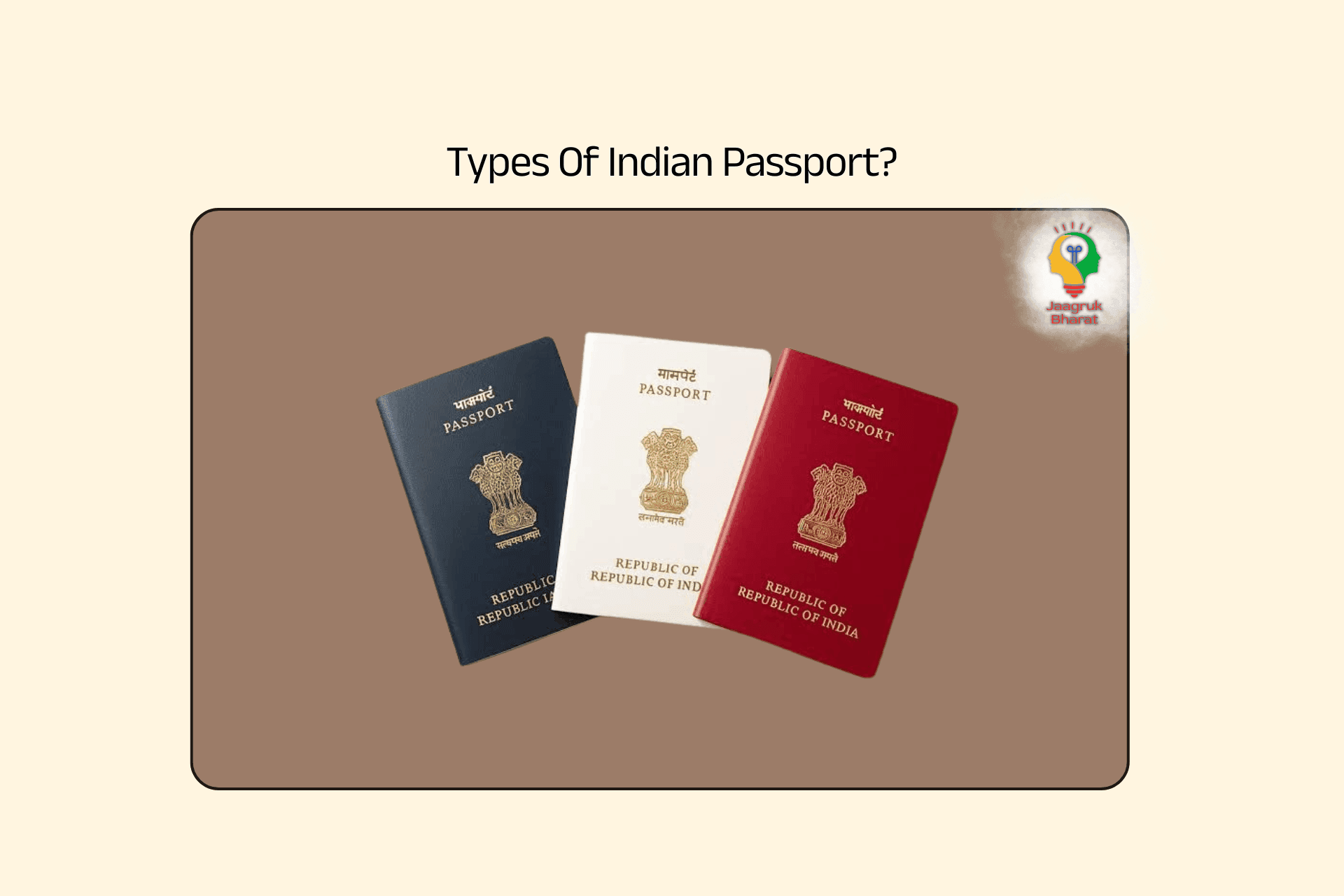
Each passport is different, with individual cover colour, eligibility and purpose. The differences help immigration officials around the world determine the status of someone's passport and deal with them accordingly.
India currently issues the following major types of passports:
-
Ordinary Passport (Blue Cover).
-
Official Passport (White Cover).
-
Diplomatic Passport (Maroon Cover).
An Orange Passport was suggested for some types of passport holders, but has not been put into place. So for now, India only has the three types of passports that have been stated above.
Types Of Passports In India
Ministry of External Affairs classifies passports into various categories according to the necessity to travel for different categories of citizens. Every passport is used for a particular purpose and given to only certain people.
1. Ordinary Passport (Blue Passport)
The passport issued to the general public is known as an Ordinary Passport, or Blue Passport. It is issued to Indian citizens for purposes like tourism, study, employment, business, medical treatment, or a visit to relations. This is the most popular Indian passport.
The blue cover is for everyday travellers and is separate from the official ones and diplomats. The applicants are required to follow the normal passport application procedure, which involves document verification and, if necessary, police verification. The Ordinary Passport has the following key features:
-
Given to Indian nationals for personal visits.
-
Used for tourism, employment, education, business and medical travel.
-
Generally valid for 10 years for adults.
-
Standard passport verification guidelines should be used for issuance.
2. Official Passport (White Passport)
The Official Passport, or White Passport, is a passport issued by the Government of India to a person on an official assignment outside India. It is not given out to the public and is only provided for those officials eligible to travel for official business.
The White Passport is granted to the person travelling on account of the Government of India in an official capacity, whereas the Ordinary Passport is issued to people who travel for their personal and official business. The key components of it are:
-
Only government officials with permission can receive it.
-
Reserved for official government work abroad.
-
Is not permitted for personal travel abroad unless authorised by appropriate regulations.
-
Generally remains valid only for the duration of the official assignment.
3. Diplomatic Passport (Maroon Passport)
The Diplomatic Passport, commonly known as the Maroon Passport, is issued to diplomats, high-ranking government officials and individuals representing India in diplomatic missions overseas. This type of passport has its own special status and may, under certain international conventions, offer certain diplomatic privileges wherever the cards are used.
Generally, diplomatic passport holders are processed sooner at the point of immigration and can be exempted from some obligations under diplomatic immunities in the country according to international laws and bilateral agreements. The key characteristics of a Diplomatic Passport are:
-
Given to diplomatic representatives and senior government officials.
-
Used specifically for official use and for official representation of India.
-
Recognised internationally as a diplomatic travel document.
-
Validity generally depends on the duration of the diplomatic posting or assignment.
Key Differences Between Different Types Of Passports
The table below highlights the key insights of the government scheme:-
| Feature | Ordinary Passport (Blue) | Official Passport (White) | Diplomatic Passport (Maroon) |
|---|---|---|---|
| Passport Cover Colour | Blue | White | Maroon |
| Issued To | General Indian citizens. | Government officials travelling abroad for official work. | Diplomats, senior government officials and authorised representatives of India. |
| Purpose | Personal travel, tourism, education, employment, business and medical treatment. | Official government assignments abroad. | Diplomatic missions and official international representation. |
| Eligibility | Any eligible Indian citizen. | Only authorised government officials. | Only eligible diplomats and high-ranking government representatives. |
| Validity | Generally 10 years for adults. | Depends on the official assignment. | Depends on the diplomatic posting or assignment. |
| Used For Personal Travel | Yes. | Generally No. | Generally No. |
| Special Privileges | No special diplomatic privileges. | Official recognition during government travel. | Certain diplomatic privileges and immunities, subject to international agreements. |
Also Read: What To Know About The Recently Announced New e-Passports?
Who Can Apply For Each Type Of Passport?
Passports have been provided to applicants who meet the eligibility criteria as prescribed by the MEA for every category. For a general passport, any Indian citizen who is eligible for the passport applicable to the general public can apply for an Ordinary Passport; however, the Official and Diplomatic passports are limited to applicants who are travelling for approved government business.
The applicant must be well aware of the purpose of the passport before making an application, as there are specialised Passports and these cannot be issued for personal travel or personal use. The eligibility for each passport type is summarised below:
Ordinary Passport (Blue Passport)
Almost all eligible Indian citizens who want to travel abroad for their personal needs can avail an Ordinary Passport. Eligible applicants include:
-
Citizens of India going abroad for tourism.
-
Students pursuing education outside India.
-
Professionals travelling for employment opportunities.
-
Owners of businesses at international events or business sessions.
-
Individuals on medical treatment, family visits, or for religious reasons.
Official Passport (White Passport)
Official Passport is a passport awarded to government officials who are travelling overseas on official duties. Typically, this will apply to applicants who are:
-
Government officials who were allowed to represent India in foreign official duties.
-
Persons travelling abroad for administrative, governmental or institutional purposes.
-
People who have been specifically nominated by the Government of India for official assignments abroad.
Diplomatic Passport (Maroon Passport)
The Diplomatic Passport is issued to persons representing India in Diplomatic service only. Common qualifications are:
-
Indian diplomats posted to foreign countries.
-
Senior government officials travelling on diplomatic assignments.
-
Members of recognised diplomatic missions.
-
Citizens who have been appointed by the Government of India as their official representative overseas.
Important: The applicants cannot select any passport type of their own preference. Passport category depends solely on the applicant's official purpose of travel & educational background.
Also Read: Major Amendments in Passport Rules 1980.
What Are The Benefits Of Different Passport Types?
All types of passports issued by the Government of India have a different purpose and provide benefits based on the passport holder's purpose and travels. Each type of passport means you can travel around the world, but the kinds of facilities and privileges depend on the type.
Applicants should become aware of these benefits to realise why passports are available in different types and what they do to help different types of travellers.
Benefits of the Ordinary Passport
-
Permits Indian citizens to engage in trips abroad for educational, personal, business and other employment reasons.
-
Acts as a widely accepted proof of identity, nationality and address.
-
Enables holders to apply for visas issued by foreign countries.
-
Supports international travel for tourism, medical treatment and family visits.
Benefits of the Official Passport
-
Facilitates smooth international travel for authorised government officials.
-
Officially identifies the holder as travelling on behalf of the Government of India.
-
Supports government delegations and official overseas assignments.
-
Simplifies official immigration procedures in many countries during government visits.
Benefits of the Diplomatic Passport
-
Represents the government during international missions.
-
May provide the quickest immigration processing in several countries.
-
Supports diplomatic representation of India in foreign nations.
-
May extend diplomatic privileges and immunities as recognised by international conventions and bilateral agreements.
Conclusion
Government of India issues various types of passports depending upon the citizens' needs for various types of travellers and the wants of officials. The Ordinary Passport (Blue) is for general travel, and the Official Passport (White) and Diplomatic Passport (Maroon) are designated only for those who have been awarded a special status by the government and who are engaged in official business. Passports have specific roles, requirements and benefits based on the type the holder is travelling with.
Beneficiaries will know which of the category passports they should obtain and will not cause any confusion in applying. It is crucial to check their eligibility, gather the necessary documents and adhere to the established procedure for the passport application through the Passport Seva system so that they enjoy a hassle-free and smooth passport application procedure.
Get the latest updates on government schemes and policies with Jaagruk Bharat. Join India's biggest Jaagruk Bharat community. Share your thoughts, questions, and favourite topics with us.
0

0
1k
0
0
1k Views
0

No comments available


