Jaagruk Bharat is a private organization offering support for documentation and government scheme access. We are not affiliated with any government body. Official services are available on respective government portals. Our goal is to make processes easier and more accessible for citizens.
Jaagruk Bharat is a private organization offering support for documentation and government scheme access. We are not affiliated with any government body. Official services are available on respective government portals. Our goal is to make processes easier and more accessible for citizens.
SC/ST Certificate — Apply Online, Documents & State-Wise Process

Updated: 22-04-2026 at 5:30 PM


1k

Serving Over
500K+ Users


There are various kinds of official documents in India, and one of those documents is a caste certificate. It is issued for people who belong to the marginalised communities of the Scheduled Castes, the Scheduled Tribes, and Other Backward Classes. The certificate helps people not only to prove their belonging to a community but also to access a wide range of government-provided benefits in various sectors, like education, employment, etc.
Read the article to learn the complete details on the Caste certificate, ranging from its meaning and benefits to eligibility and application process, including answers to popular questions like ‘SC certificate kaise banaye?’ and information on state-wise application procedures.
Read More On Rajiv Gandhi National Fellowship For Scheduled Caste Candidates
Caste Certificate Overview
The table below summarises key details of a Caste Certificate that one should know about.
| Meaning | An official government document proving that a person is a part of a marginalised community. |
|---|---|
| Issued by | State government authorities, like a Tehsildar, SDM, or a District Magistrate. |
| Recognised caste categories | Scheduled Castes (SCs), Scheduled Tribes (STs), and Other Backward Classes (OBCs). OBC is further divided into Non-Creamy Layer (NCL) and Creamy Layer(CL). |
| Purpose | To allow valid certificate holders to reap various benefits, like reservation quotas, eligibility to various social welfare schemes, etc. |
| Validity | Remains valid for an individual’s lifetime, but the OBC NCL certificate needs to be renewed every year. |
| Mode of application | Online via official state govt portals or offline via Common Service Centres. |
| Processing time of applications | Usually ranges from a few days to a maximum of 45 days. |
What Is A Caste Certificate?
A caste certificate is an official government document that is issued primarily by various state government authorities. As its name suggests, it is a specific type of document that is issued to people who come from the marginalised communities of India. With the help of the certificate, people can avail themselves of various kinds of benefits to improve their standard of living and grow both their personal and professional lives.
Caste certificates are mainly issued for three main types of castes. i.e., Scheduled Castes (SCs), Scheduled Tribes (STs), and Other Backward Classes (OBCs). The OBC category is further divided into two sub-categories, and both categories enjoy different types of benefits.
The two categories are Non-Creamy Layer (NCL) and Creamy Layer(CL). The difference between the two is as follows:
| Component | Non-Creamy Layer (NCL) | Creamy Layer(CL) |
|---|---|---|
| Meaning | NCL represents the people from economically weaker sections within the OBC category. | CL represents those who do not struggle financially and are leading comfortable lives. |
| Income level | The annual income of the applicant’s family should be less than Rs 8 lakh. | The annual income of the applicant’s family is more than Rs 8 lakh. |
| Access to reserved quotas | Can avail benefits under reserved quotas in various sectors, like education and employment. | Cannot avail the benefits of reservation as it is set aside only for the people in need. |
| Certificate requirement | A valid OBC NCL certificate is required. | No separate certificate is issued. |
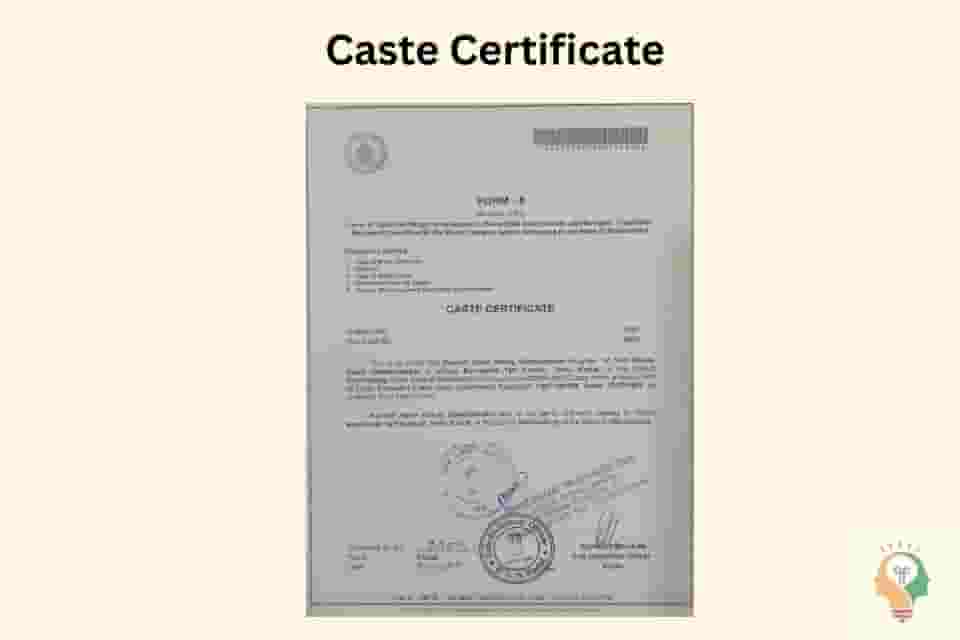
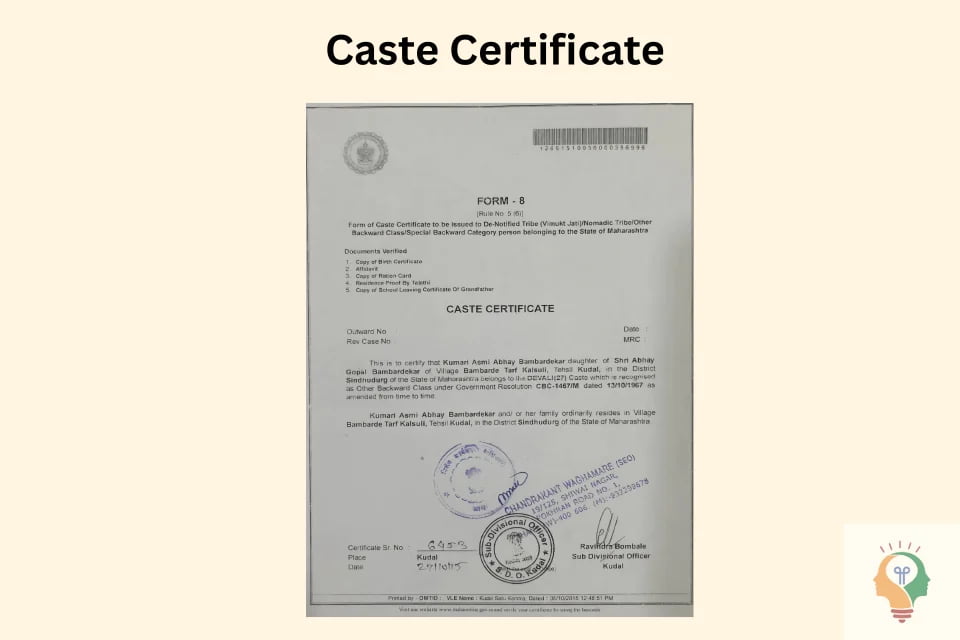
Caste Certificate Format
A general format of information, following which the caste certificate is issued, is as follows:
-
Full name of the applicant for whom the certificate is being issued.
-
Name of the applicant’s father.
-
Permanent address.
-
Date of birth.
-
The original birthplace of the applicant.
-
Identification mark of the applicant, like a mole.
-
The name of the caste for which the caste certificate is being issued.
-
Name and designation of the issuing authority.
-
Unique identification number of the certificate.
-
Date of issue of the certificate.
Validity Of A Caste Certificate
The validity of a caste certificate is entirely based upon two factors. i.e., its type and its purpose of use. The validity is broken down for one’s clear understanding:
-
If the certificate has been issued to a person who belongs to the caste of either the Scheduled Castes, the Scheduled Tribes, or the Other Backward Classes, the certificate is valid for the individual’s whole life. They do not have to worry about renewing it.
-
If a caste certificate is issued to a person who belongs to the Other Backward Classes (Non-Creamy Layer) category, such certificates remain valid only for a year and hence, will need to be renewed every financial year. i.e., on April 1.
Also Read On Dr Ambedkar Scheme For Social Integration Through Inter-Caste Marriage
Who Should Apply For A Caste Certificate?
When it comes to the question of ‘Who actually needs a Caste Certificate?’, the answer is pretty simple. Types of people who should apply for a caste certificate are:
-
Students who are a part of marginalised communities and want to apply to educational institutions under reserved quotas.
-
People applying for govt jobs. Such individuals should especially apply under reserved quotas, if eligible, as the competition is extremely tough.
-
Individuals interested in standing in elections but from a reserved seat.
-
Migrants who frequently travel from one state to another should apply for a caste certificate if eligible to avail various kinds of benefits.
Benefits Of An SC/ST/OBC Certificate
A Caste Certificate comes along with numerous benefits for people who possess it. Some of its major and popular benefits are described below in detailed points:
-
One of the most popular benefits of having a valid caste certificate is access to the reservation quota that one can use in various sectors, like education and employment. Reserved quota cuts down competition and increases people’s chances of getting a seat in an educational institute or securing a job in either the public or private sector.
-
Another benefit associated with the caste certificate is related to scholarships or other forms of financial aid. People from marginalised communities can apply for various kinds of scholarships or concessions and pursue their dream educational courses from reputed institutes without worrying about financial barriers.
-
The government continuously works on various kinds of schemes and services concerning various things like monetary assistance for proper housing, subsidies, skill development programs, etc., especially for people who come from marginalised communities. Only people with a valid certificate can apply for such schemes and reap their benefits.
-
People who possess a valid caste certificate can also enjoy various forms of relaxation, such as relaxation in qualifying marks in an entrance exam for an educational course or a job, or age relaxation when one sits for a government-related exam.
Eligibility Criteria For Obtaining An SC/ST/OBC Certificate
Individuals interested in applying for an SC/ST/OBC certificate are required to fulfil all the conditions of eligibility to successfully obtain one. The eligibility criteria are as follows:
-
Applicants must be Indian citizens and permanent residents of the state from whom they are working on obtaining a caste certificate.
-
The community that the individual belongs to should be a recognised caste and mentioned in the official list issued following the provisions of Article 341 for Scheduled Castes, Article 342 for Scheduled Tribes, and state govt provisions for Other Backwards Classes. Note that this is extremely important as unrecognised castes won’t qualify people for a caste certificate.
-
Applicants are mandated to prove that their ancestors belonged to the said caste for which they want a caste certificate.
-
If an individual is applying for an OBC caste certificate, they must come under the Non-Creamy Layer (NCL), meaning their annual income must be below Rs 8 lakh.
How To Apply For A Caste Certificate?
One can apply for a Caste Certificate through both online and offline platforms. The application process for both means is broken down into steps for one’s better understanding and clarity.
SC ST Certificate Apply Online Process
Step 1: Please visit the official website of your respective state government or the dedicated portals maintained by your state government for the application of caste certificates.
Step 2: Register in the portal using your personal details and set up your credentials.
Step 3: Log in to the portal and then navigate to filling out the application form for a caste certificate and fill in your basic details, like name, address, father’s name, etc., carefully and accurately.
Step 4: Upload the scanned copies of all the required documents. Ensure that the uploaded images are clearly visible and in the prescribed size and format accepted by the portal.
Step 5: Review the filled information and the order of the documents uploaded once before making the final submission.
Step 6: Pay a nominal fee (amount varies from one state govt authority to another) after which your form will be successfully submitted. Note the Application Reference Number (ARN) for future reference.
Offline Procedure
Step 1: Visit the nearest Common Service Centre (CSC) in your home place.
Step 2: Request the staff member to provide you with an application form for a caste certificate.
Step 3: Fill in all the details in the application form without making errors, as a minor error can also lead to the complete rejection of the application. There will be an option in the form wherein you will be asked to tick upon your caste, please choose the correct category.
Step 4: Attach the copies of all the supporting documents. Review all the information filled in the form once again, and then pay the nominal fee at the CSC to complete the application process. The staff member will provide you with a reference number. Keep it safe, as it can be used for various purposes, like tracking the status of applications.
How To Check The Status Of One’s SC/ST/OBC Certificate Application?
After the successful submission of application forms, applicants can check the status of their respective applications. The steps of doing the same are as follows:
Step 1: Visit the official website of your respective state government or the dedicated portals for caste certificates (one you visited while applying for one).
Step 2: Find the ‘Application Status Check’ option and then click on it.
Step 3: Enter your Application Reference Number and click on ‘Submit’, after which the system will show you the status of your respective applications as either ‘Pending’ or ‘Approved’.
How To Download An SC/ST/OBC Certificate?
After approval of applications, authorities usually issue the caste certificate in both physical and electronic forms, and it is better to have both forms in hand. The process of downloading the soft copies of caste certificates is described below:
Step 1: Visit the official website of your respective state government or the dedicated portals for caste certificates (one you visited while applying for one).
Step 2: Log in to your portal using your credentials and then navigate to the ‘Download Caste Certificate’ option.
Step 3: The system will display the caste certificate on your screen. Applicants can save it on their devices in PDF format.
What Are The Documents Required For A Caste Certificate?
Applicants are required to attach or upload some supporting documents while completing the application process. The list of ST certificate documents, SC, and OBC documents is as follows:
-
Proof of identity, like an Aadhaar card, PAN card, Voter ID card, or a Passport.
-
Proof of address, in the form of utility bills or a rental agreement.
-
Proof of caste, acceptable forms are an affidavit from an officially gazetted officer, a School leaving certificate, or a caste certificate of a family member.
-
Self-declaration stating that one is from the communities of either the Scheduled Caste, the Scheduled Tribe, or the Other Backward Classes.
-
Recently-clicked passport-size photographs.
Read More On Antarjatiye Vivah Protsahan Anudan Yojana For Inter-Caste Marriages In Bihar
Information Of Major State Governments Concerning The Issuance Of A Caste Certificate
As you know by now, a caste certificate is issued by state government authorities, and that’s why we have compiled detailed, informative tables for you so that you can have an idea about the specifics of the application process.
Issuing Authorities
| Name of the state | Issuing Authority | Processing Time |
|---|---|---|
| Andhra Pradesh | Revenue Department. | 15 days (30 days for ST category). |
| Arunachal Pradesh | Deputy Commissioner’s Office of each district. | 14 days. |
| Assam | Office of the Deputy Commissioner or SDO of each district. | 30 days. |
| Bihar | Circle office/SDO office/District Magistrate office. | 10 days. |
| Chhattisgarh | SDM/Tehsildar/Revenue Department Offices. | Not specified. |
| Goa | Revenue Department. | 10 days. |
| Gujarat | Tehsil/Revenue Office. | Not specified. |
| Haryana | SDM of the concerned subdivision or the District Commissioner of the concerned district. | A week. |
| Himachal Pradesh | Tehsildar/Naib Tehsildar of the concerned district. | Not specified. |
| Jharkhand | Department of Personnel, Administrative Reforms and Rajbhasha. | Not specified. |
| Karnataka | Taluk-level functionary. | 21 days. |
| Kerala | Revenue Inspector or Village Administrative Officer. | 5 days. |
| Madhya Pradesh | Tehsil/Revenue/Circle Office. | 30 days. |
| Maharashtra | Sub-Divisional Officer/ Deputy Collector. | 45 days. |
| Manipur | Office of the Deputy Commissioner. | Not specified. |
| Meghalaya | Sub-Divisional Officer/ Deputy Collector. | Not specified. |
| Mizoram | Tehsil/Revenue/Circle Office. | 2 to 3 days. |
| Nagaland | Office of the Commissioner, Nagaland / District Administration / District Magistrate. | Not specified. |
| Odisha | District Magistrate/ADM/SDO/Tahsildar. | Not specified. |
| Punjab | Concerned Sub-Divisional Office. | Maximum 6 days. |
| Rajasthan | Respective Tehsil/Block/Revenue Office. | Not specified. |
| Sikkim | District Administrative Centre. | Not specified. |
| Tamil Nadu | Taluk/Panchayat Union Office. | Not specified. |
| Telangana | Tehsil/Revenue Office. | 15 days (30 days for ST category). |
| Tripura | Office of the Sub-Divisional Magistrate. | 15 to 40 days. |
| Uttar Pradesh | District Magistrate's Office of the concerned district. | 15 to 25 days. |
| Uttarakhand | Respective Tehsil /Revenue/Circle Office. | Not specified. |
| West Bengal | District Welfare Office/SDO/BDO. | Not specified. |
| Andaman and Nicobar Islands | Concerned Tehsildar Officer. | Around 14 days. |
| Chandigarh | SDM Office. | 9 to 30 days. |
| Dadra and Nagar Haveli | Mamlatdar office/Collector office. | 7 to 10 days. |
| Daman and Diu | Mamlatdar office/Collector office. | 7 to 10 days. |
| Delhi | SDM/Tehsildar/CSC (Citizen Service Centre). | 14 days. |
| Jammu and Kashmir | Concerned Tehsildar Offices. | Not specified. |
| Ladakh | Concerned Tehsildar Offices. | Not specified. |
| Lakshadweep | Tehsil /Revenue/Circle Office. | Not specified. |
| Puducherry | Tehsil /Revenue/Circle Office. | Not specified. |
State Government Portals For Obtaining An OBC SC ST Certificate Online
The table below summarises online portals of each major state government that one needs to visit while applying for a caste certificate SC, ST, OBC online:
| Name of the state | Online portal |
|---|---|
| Arunachal Pradesh | Via the Arunachal eServices portal of the Government of Arunachal Pradesh. |
| Assam | Through the e-District services of the Assam state portal. |
| Chhattisgarh | Apply through the Chhattisgarh state portal. |
| Goa | Goa Online portal. |
| Gujarat | Via the Digital Gujarat portal. |
| Haryana | One can download the form from the e-Disha portal and then submit it to the concerned authority. |
| Himachal Pradesh | Apply online through the Himachal Online Seva e-District portal. |
| Jharkhand | Through the Jharkhand e-District (JharSewa) portal. |
| Karnataka | Via the official website of Nadakacheri AJSK. |
| Maharashtra | Via the Aaple Sarkar portal. |
| Manipur | Apply through the e-District portal of Manipur. |
| Meghalaya | Through the e-District portal of Meghalaya. |
| Punjab | Through the state portal of Punjab. |
| Tamil Nadu | Apply through the Tamil Nadu e-Sevai. |
| Tripura | Via the e-District portal of Tripura. |
| Uttar Pradesh | Through the e-Saathi web portal. |
| West Bengal | West Bengal e-District portal. |
| Chandigarh | Via the Sampark portal of Chandigarh. |
| Daman and Diu | Through the official portal of the Daman and Diu Administration. |
| Delhi | e-District portal of Delhi. |
| Puducherry | Via the e-District portal of Puducherry. |
Common Issues & Their Solutions Concerning An SC/ST/OBC Certificate
The application process of SC/ST/OBC certificates is made to be as simple and easy as possible by the state govt authorities. However, it is only easy if one takes care of certain prerequisites and avoids making minor errors, as those errors can lead to rejection of applications.
Some of the common errors and ways of resolving them that people make, and you should be aware of so that you can avoid them while applying for a certificate, are described below in brief points:
-
Many people commit errors while filling out their information in the application form, or they attach outdated or poorly visible documents. Such errors are not taken lightly by the authorities, as they fail to verify the applicant’s information, which leaves them with just one option, and that is the rejection of applications. The only way to solve this issue is to stay alert and active while filling out the application form and uploading the documents. Also, ensure to recheck all the information once before clicking on ‘Final Submit’.
-
A lot of times, applications remain pending for approval for weeks for whatever reason. We advise you to be proactive here and check the status of your applications regularly. If the status does not change for weeks, please do not hesitate to file a complaint with the district officer or other relevant authorities in charge.
-
People applying online using the official portals created and managed by the state government authorities often face technical website-related glitches or delays. If you are stuck, try opening the website again in a different browser, clear out cookies and cache, or re-login after some time, as traffic on the website can be a probable reason. If the issue is still there, contact the technical team and seek help.
Also Read On Punjab Direct Lending Scheme By PSCLDFC- Financial Support For SC & PwD
Conclusion
In a country like India, where people still believe in age-old concepts of caste and maintain a hierarchy system, a caste certificate serves the role of a protective barrier for people who come from such marginalised communities of SCs, STs, and OBCs. It not only helps them in accessing various kinds of tangible benefits but also provides them with the psychological comfort of being recognised and supported by major authorities like the government.
If you are eligible for this certificate, we highly advise you to either apply on your own or else allow us to help you apply on your behalf, as this certificate has been designed for you, and it is of no use if eligible people don’t make use of it.
Stay updated with Jaagruk Bharat to get the latest information on government schemes and more, and reach out to us via our community page if you have any questions.
Why Choose Jaagruk Bharat To Apply For A Caste Certificate?
Allow Jaagruk Bharat to help you and apply for a Caste Certificate on your behalf in just a few clicks! Get 24/7 support, expert assistance, online services, and a hassle-free application Process with Jaagruk Bharat.
0

0

1k

0
0
1k Views
0

No comments available


Our Company
Home
About
T&C
Privacy Policy
Eula
Disclaimer Policy
Code of Ethics
Contact Us
Careers
Cancellation & Refund Policy
Categories
Women
Insurance
Finance
Tax
Travel
Transport & Infrastructure
Food
Entertainment
Communication
Government ID Cards
E-commerce
Traffic guidelines
Miscellaneous
Housing and Sanitation
Sports
Startup
Environment and Safety
Education
Agriculture
Social cause
Employment
Disclaimer: Jaagruk Bharat is a private organization offering support for documentation and government scheme access. We are not affiliated with any government body. Official services are available on respective government portals. Our goal is to make processes easier and more accessible for citizens.
All Copyrights are reserved by Jaagruk Bharat