Indian Railways' Reservation Coach Rule Updated In 2026
Updated: 10-10-2026 at 8:31 AM


6k
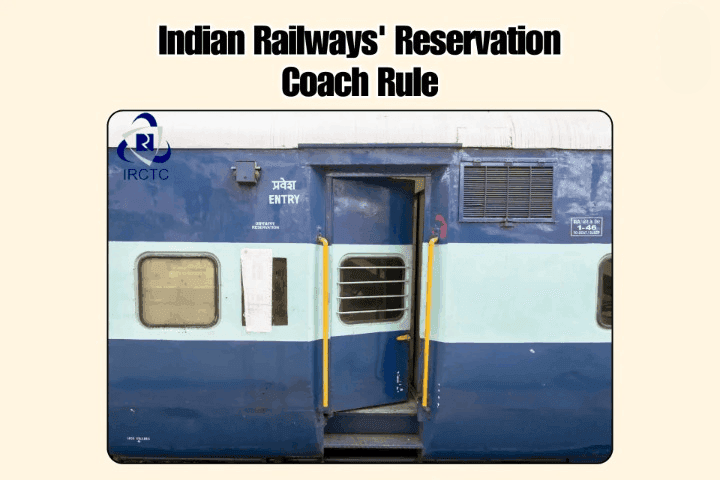
The Indian Railways are often described as the lifeline of the nation, connecting remote villages to metropolitan cities across more than 68,000 kilometres of track. Every day, millions of passengers rely on trains for affordable and long-distance travel. However, chronic overcrowding, particularly in Sleeper and AC coaches, has raised serious safety and comfort concerns over the years.
To address these challenges and improve passenger safety, authorities have introduced a significant Indian Railways rule change 2026 aimed at stricter enforcement of reservation norms. This move marks a major shift in how ticket verification operates on board trains and directly impacts passengers travelling without confirmed tickets. The update has generated widespread debate, with supporters highlighting improved discipline and critics pointing to implementation issues.
Overview
The table below summarises the key details of the new reservation enforcement rule introduced by Indian Railways:
| Particulars | Details |
|---|---|
| Rule Name | Indian Railways reservation coach rule |
| Implementation Authority | Indian Railways / IRCTC |
| Affected Coaches | Sleeper & AC Coaches |
| Key Objective | Prevent overcrowding and ensure comfort for confirmed ticket holders |
| Enforcement Mechanism | Ticket-checking squads shifted from stations to onboard trains |
| Penalty (AC Coach) | ₹440 + fare till next station |
| Penalty (Sleeper Coach) | ₹250 + fare till next station |
| Announcement System | Continuous station announcements for passenger awareness |
| Policy Category | New coach reservation policy update Indian Railways |
Read More: Try Auto-Payment For Your Next Journey With Indian Railways
What Is The New Rule?
Indian Railways has historically struggled with overcrowded trains, particularly in reserved compartments. Passengers travelling with waiting list tickets, or without tickets altogether, often enter Sleeper and AC coaches, creating unsafe and uncomfortable conditions.
To address this issue, the Railways introduced the Indian Railways reservation coach rule, shifting ticket-checking squads from railway stations directly onto trains. Instead of checking tickets primarily at station entry points, enforcement teams now operate onboard to ensure that only passengers with confirmed reservations occupy Sleeper and AC coaches.
Under the Indian Railways rule change 2026, passengers found travelling in AC coaches with only a waiting ticket face a fine of ₹440 plus the fare up to the next station. In Sleeper class, the fine stands at ₹250 plus the fare to the next stop. This aligns with updated Train seat reservation rules India, reinforcing the principle that reserved coaches are strictly for confirmed ticket holders.
Authorities have also launched continuous public announcements at stations to spread awareness. The aim is to ensure passengers understand the new enforcement approach and avoid penalties.
Why Was This Rule Introduced?
For years, overcrowding has created unsafe travel conditions. During peak seasons, passengers with waiting list tickets frequently board reserved coaches, hoping for vacant seats or adjustments. This practice leads to:
-
Blocked aisles and emergency exits.
-
Discomfort for confirmed passengers.
-
Increased risk during accidents or sudden stops.
-
Disputes between passengers and railway staff.
The new enforcement policy seeks to protect passengers who book confirmed tickets in advance. By implementing stricter Railway coach reservation rules 2026, authorities intend to discourage unauthorised travel in reserved compartments.
Passenger Reactions and Ground Reality
While the rule aims to enhance safety and comfort, public response has been mixed. Reports suggest that complaints have increased by nearly 36% since implementation. Many passengers who previously travelled with waiting list tickets feel inconvenienced by stricter enforcement.
Over time, informal adjustment practices had become common. Passengers often managed to travel despite an unconfirmed status. The sudden enforcement of the New coach reservation policy update Indian Railways has disrupted this long-standing travel behaviour.
Additionally, ticket-checking staff face operational challenges. With short halts at stations, it becomes difficult to impose penalties or relocate passengers efficiently. Often, passengers without confirmed tickets are directed to the last Sleeper coach, leading to severe overcrowding in that compartment.
This concentration of passengers in one area undermines the policy’s comfort objective, highlighting the need for refinement in implementation.
Read More: Can You Claim For Compensation In Events Of Railway Accidents?
Benefits Of The New Rule
While the policy has sparked debate, it offers several important benefits. The following points outline how the Indian Railways reservation coach rule can positively impact train travel:
1. Improved Passenger Safety
Reserved coaches are designed for a fixed capacity. Enforcing Train seat reservation rules India ensures emergency pathways remain clear and reduces risks during unforeseen incidents.
2. Enhanced Comfort
Passengers who book confirmed tickets often pay higher fares for Sleeper and AC comfort. The rule ensures that these passengers receive the space and convenience they are entitled to.
3. Fairness and Discipline
The Railway Coach Reservation Rules 2026 promote fairness by discouraging unauthorised occupancy. This creates a more disciplined travel environment.
4. Reduced Ticket Misuse
Stricter onboard checks limit the misuse of waiting list tickets in higher classes, ensuring better compliance with official reservation systems.
5. Better Data and Planning
Accurate occupancy data helps Railways assess demand. This could support future decisions such as increasing coach capacity or introducing special trains during peak seasons.
6. Encouragement for Advance Booking
With enforcement tightened under the Indian Railways rule change 2026, passengers are encouraged to plan and confirm travel well in advance.
Challenges In Implementation
Despite its advantages, the new rule faces several practical hurdles:
-
Short Station Halts: Limited time prevents effective enforcement.
-
Overcrowding in Last Coaches: Redirected passengers cause congestion in specific compartments.
-
Passenger Frustration: Habitual travellers feel the policy was implemented without a transition period.
-
Staff Constraints: Ticket-checking squads face pressure in managing large crowds onboard.
These challenges indicate that while the policy direction is correct, the execution requires additional infrastructure support and awareness campaigns.
Long-Term Impact of the Policy
If refined properly, the New coach reservation policy update Indian Railways could mark a significant shift in Indian train travel culture.
In the long run, stricter enforcement may:
-
Improve overall passenger satisfaction among confirmed ticket holders.
-
Encourage digital reservations and planning.
-
Reduce onboard conflicts.
-
Support modernisation of the reservation system.
As Indian Railways moves towards technological upgrades, including AI-based seat allocation and real-time tracking, strict adherence to Train seat reservation rules India could become a cornerstone of safer railway operations.
Read More: Indian Railways Directed To Pay 1 Lakh To Passenger For Negligence, Bag Stolen During Journey
Is the Rule Effective So Far?
The initial phase suggests mixed outcomes. While some passengers appreciate improved seating conditions, others complain about operational chaos. The 36% increase in complaints reflects dissatisfaction but also indicates that enforcement is actively taking place.
Policy transitions often face resistance. Over time, as passengers adapt to the stricter Railway coach reservation rules 2026, compliance levels may improve.
Conclusion
The Indian Railways reservation coach rule represents a decisive attempt to tackle long-standing overcrowding issues in Sleeper and AC compartments. By shifting ticket-checking squads onboard and imposing fines on passengers travelling without confirmed tickets, the Railways aim to prioritise safety, fairness, and comfort.
Although the Indian Railways rule change 2026 has triggered mixed reactions and operational challenges, its core objective remains valid. Ensuring that reserved coaches are used strictly by confirmed ticket holders aligns with modern travel standards and international best practices.
However, effective implementation will require better crowd management strategies, improved awareness campaigns, and possibly increased coach capacity during peak travel periods. If authorities address these concerns thoughtfully, the New coach reservation policy update Indian Railways could significantly enhance the travel experience for millions of passengers.
Ultimately, the policy signals a shift towards more disciplined railway operations. With refinement and public cooperation, this reform could transform overcrowded journeys into safer and more comfortable travel experiences across India’s vast railway network.
Get the latest updates on government schemes and policies with Jaagruk Bharat. Join India's biggest Jaagruk Bharat community. Share your thoughts, questions, and favourite topics with us.
Frequently Asked Questions
1

0
6k
1
0
6k Views
0

No comments available


