FASTag India — Apply, Recharge, Complaints & Rules 2026
Updated: 24-04-2026 at 3:30 PM


1k
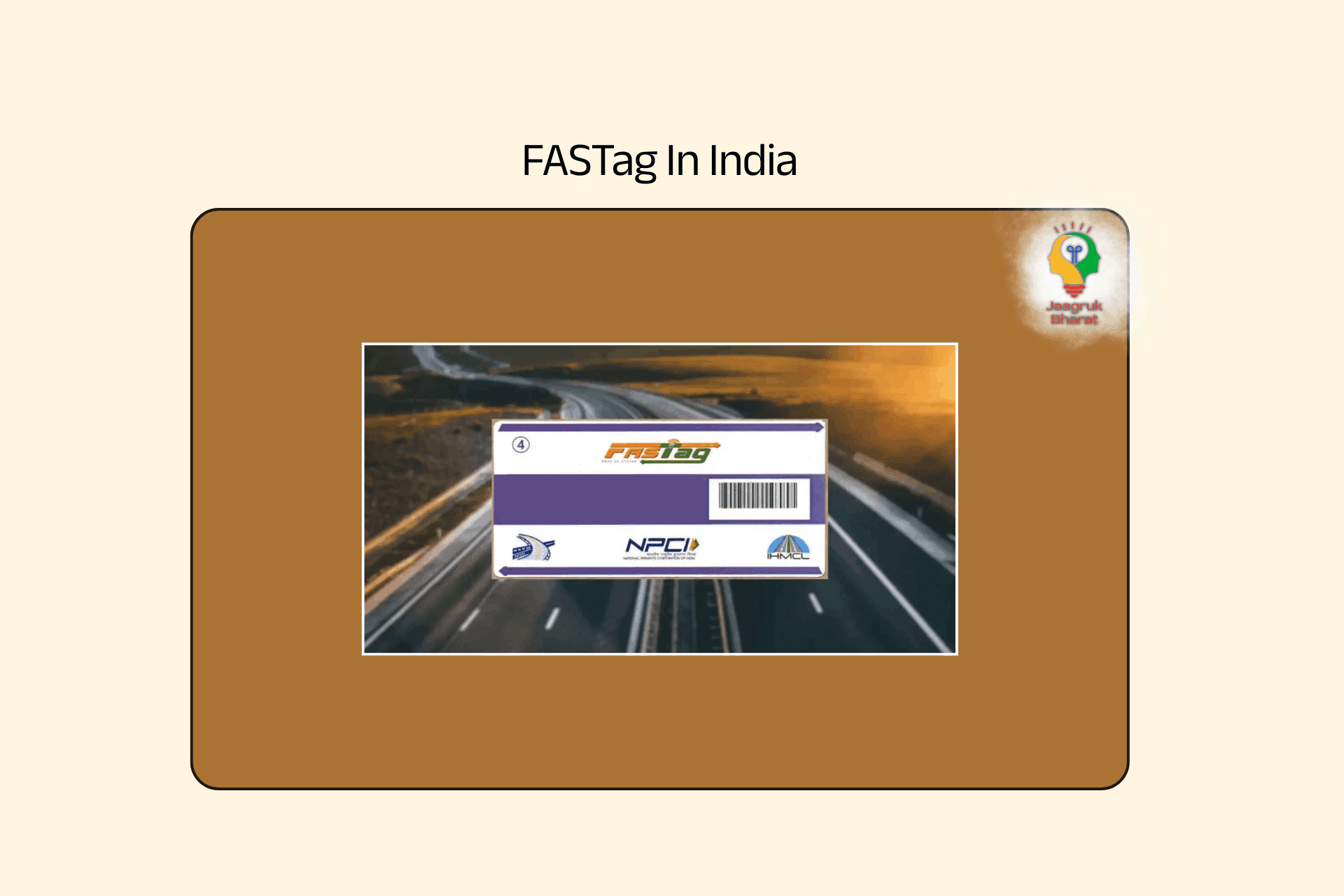
The National Highways Authority of India has experienced remarkable growth in the recent past, with highways contributing greatly to the economic growth, logistics and even in everyday commuting. Yet, the conventional toll collection systems (NETC FASTag) tended to create lines of people waiting at the toll plazas, wasting fuel and time, which influenced NHAI to bring a digital method to solve this issue efficiently and improve the user experience.
The Government of India has proposed FASTag to overcome these challenges, an electronic toll collection system which employs Radio Frequency Identification (RFID) technology. With this system, the deduction of the toll charges can be done automatically, and the vehicles do not need to halt at the toll plaza, thus making travelling quick, easier and more convenient.
As more people switch to digital payment with the implication of the Digital India Programme, FASTag is now an obligatory feature on the majority of vehicles on national highways. According to the most recent estimates, over 7 crore FASTags have been issued in India, and over 95 per cent of the toll collections are being carried out electronically. This underscores the major transition to a technology-centric and cashless transportation ecology.
This article will discuss all about FASTag in detail, the meaning, mechanism of operation, benefits, charges, process of application and important guidelines.
FASTag — Overview
The table below highlights the key insights of the FASTag Facility in India:-
| Particular | Details |
|---|---|
| System Name | FASTag |
| Introduced By | National Highways Authority of India (NHAI) |
| Technology Used | RFID (Radio Frequency Identification) |
| Purpose | Electronic toll collection |
| Mode | Cashless / Digital |
| Applicable For | All four-wheelers and commercial vehicles |
| Mandatory Status | Compulsory for national highways |
| Linked With | Bank account / Wallet (FASTag bank list) |
| FASTag Recharge Mode | Online |
| Coverage | PAN India (NH toll plazas) |
Also Read: Vehicle Tax Payment Online: Step-by-Step Process & Requirements
What Is FASTag?
FASTag is an automated system for paying tolls. It uses a bank account or electronic wallet linked to an RFID chip installed on a vehicle, which performs the task of automatic deduction and scanning the vehicle as soon as it approaches a toll plaza.
The system eliminates cash payments at toll booths, thus reducing wait times for all toll payments through the electronic collection system's documentation.
Banks and other licensed agencies will provide you with a FASTag, which can last for five years. Users can subsequently recharge the FASTag after activating it via the same method as for a "pay as you go" service.
How FASTag Works?
It is vital to have a clear comprehension of how FASTag works in real-time situations at toll plazas before being aware of its advantages.
-
As a vehicle with a FASTag passes through a toll plaza, the RFID reader at the toll booth will automatically read the data in the tag without necessarily stopping the vehicle.
-
Upon detection of the tag, the system recognises the associated account or wallet and charges off the relevant amount of the toll in real-time, thus maintaining a smooth transaction.
-
The user is instantly notified through SMS or a mobile application, which gives information about the transaction, such as the amount of the toll, the date, and the balance left.
-
When the FASTag has less than adequate balance, the vehicle can be sent to a cash lane or be charged twice the toll according to the regulations to promote the proper use of the system.
-
It will require a few seconds to complete the process, greatly cutting waiting time and enhancing the movement of traffic at toll plazas.
Characteristics Of FASTag
FASTag has multiple sophisticated features that are efficient, secure and user-friendly. The knowledge of these features can enable users to utilise the system better.
-
FASTag operates by RFID technology, allowing paying the toll without human interaction, and paying it automatically and without making contact, which makes it a fast and precise process.
-
The system also offers cashless transactions and enables the user to connect the FASTag with their bank accounts, debit cards or digital wallets to enable easy recharge and payments.
-
It also offers SMS and a mobile application to send real-time transaction alerts to maintain transparency and enable users to monitor their toll costs.
-
FASTag is usable on all highways in the country, making it convenient and covering to travellers.
-
It is interoperable, i.e. one FASTag can work on different toll plazas and different states without the need to purchase different tags.
Benefits Of FASTag
The FASTag introduction has introduced various benefits to the government and users. These advantages are not limited to convenience but also add to efficiency, transparency and environmental sustainability.
-
FASTag also helps to save a lot of time at toll plazas since cars do not have to pull up and be manually charged tolls, leading to improved traffic movement.
-
It assists in fuel conservation by reducing the time taken to idle at toll booths, which also has a part in cutting down carbon emissions and environmental pollution.
-
The system will encourage electronic payments and minimise the reliance on cash payment systems, which is in line with the government's drive towards a cashless economy.
-
It also promotes transparency in the collection of the tolls as all the transactions are captured digitally and can be easily tracked by the users.
-
FASTag will decrease highway congestion, enhance the efficiency of travel in general and shorten travel time for long-distance commuters.
FASTag Fees And Charges
To prevent confusion, one should be aware of the FASTag charges before applying for a FASTag.
| Component | Details |
|---|---|
| Tag Cost | ₹100 (approx.) |
| Security Deposit | ₹200–₹500 (vehicle type-based) |
| Minimum Balance | ₹100–₹200 |
| Replacement Fee | Applicable if damaged |
| Toll Charges | As per the vehicle category |
-
The users must pay an issuance fee that is refundable and a security deposit that is refundable and varies according to the type of vehicle.
-
The FASTag account should have a minimum balance to avoid penalties and ensure that toll payments are not interrupted.
-
Other fees can be implemented in the event of replacement or re-issue of tags because of damage or loss.
Also Read: Road Tax Rules In India: A Practical Guide To Motor Vehicle Taxation & Compliance.
Documents Required For FASTag
To obtain a FASTag, users must provide certain basic documents for verification.
| Document | Purpose |
|---|---|
| Vehicle RC | Vehicle verification |
| ID Proof | Identity confirmation |
| Address Proof | Address verification |
| Passport Photo | Identification |
| Mobile Number | OTP verification |
All documents must be valid and match the details provided during the application process to avoid rejection or delays.
How To Apply For The FASTag? (Step-by-Step Process)
The procedure of applying for FASTag is not complicated, yet it should be done with a keen focus on detail to be effective.
Step 1: The applicant is to start with the selection of a qualified issuer, like a bank or digital platform and start the FASTag apply online or offline.
Step 2: Vehicle information, such as registration and owner details,s should be typed properly to facilitate proper connection of FASTag.
Step 3: Documents needed have to be provided or uploaded to verify them, making sure that the details are identical to those available in the official records.
Step 4: Once it is verified, the FASTag is given out, and it can be attached to the windshield of the vehicle to be activated.
Step 5: The user has to add the necessary amount of money into the FASTag account to begin making use of it to pay tolls.
How To Recharge FASTag online?
To maintain continuous payment of toll and a hassle-free travelling experience, it is important to recharge your FASTag. Because FASTag operates based on a prepaid program that is connected to a bank account or wallet, one will have to keep a substantial balance in order to prevent fines or failure of transactions. Knowing the proper charging procedure assists users in operating their FASTag effectively.
-
The FASTag can be recharged in a variety of digital ways, including net banking, debit cards, credit cards, UPI or mobile wallets, making it flexible and convenient for all categories of users.
-
The correct FASTag issuer or service provider should be chosen before the recharge is made to be sure that the payment is not delayed and credited to the incorrect account.
-
The user should type the registered mobile number, vehicle number or the FASTag ID carefully because wrong information will lead to unsuccessful or incorrect transactions.
-
The balance is often updated instantly after the payment is completed, but in other instances, that payment can take a few minutes, depending on the mode of payment.
-
SMS or app notifications confirm the user and can assist in keeping track of the history of recharge and maintain transparency.
-
FASTag balance should be regularly monitored and recharged so that users can cross the toll plazas without any disruption and without extra charges.
Penalty & Fines For Failure To Use FASTag
FASTag is now obligatory for vehicles on national highways, and failure to do so may result in the imposition of penalties by the government.
-
Cars that lack a valid FASTag can be charged a higher fee when they are going through FASTag lanes, and this means that the cost of travelling with them will be high.
-
Failure to comply can also cause delays during tolls, since such vehicles are diverted to special lanes where their performance checks are done manually.
-
The consistent failure to utilise FASTag could lead to inconvenience and further inspection at toll checkpoints.
Validity, Replacement, And Closure Of FASTag
Learning the lifecycle of a FASTag, such as how the tag can be used, its validity, replacement, and closure process, is essential to long-term usage. This would assist users in handling their FASTag efficiently and not get inconvenienced when travelling.
-
FASTag itself has no expiry date in the traditional sense; the physical RFID chip is generally warrantied for 5 years.
-
Users should request a replacement tag in case of destruction, unreadability, or improper FASTag fixation to ensure uninterrupted toll transactions.
-
To make a replacement request, only simple information like vehicle number and registered mobile number is required, with a nominal fee being paid.
-
In case of selling or non-use of the vehicle, then the users should close or deactivate the FASTag account to avoid unwarranted use or wrong deductions.
-
The closure process will entail the filing of a request to the issuing authority and also making sure that any outstanding balance is refunded to the account linked to it.
-
The adequate control of FASTag validity and closure will guarantee enhanced control of finances and avoid the abuse of the tag.
Also Read: RTO NOC Online For Vehicle Transfer – Apply, Status & Required Documents
FASTag Vehicles And Classes
FASTag can be used in a broad spectrum of vehicles, and the toll fee will be charged on the basis of the type and category of the vehicle. These classifications make it easy to estimate costs and organise travel depending on the understanding of these classifications.
-
FASTag applies to all four-wheelers, whether it is a personal car, jeep, van, or a commercial vehicle like a truck or a bus, so that everyone in the country is covered.
-
The charges on tolls are ascertained according to the type of vehicle, with bigger and heavier vehicles being charged more as they cause more damage to the road infrastructure.
-
FASTag is also advantageous to commercial vehicles, since it saves time at the wait line, enhances efficiency in logistics, and also saves fuel during long-distance travel.
-
There are special classes like emergency vehicles or vehicles approved by the government that might not attract any tolls, based on the relevant rules and regulations.
-
To avoid incorrect deductions and fines, users should ensure their FASTag is properly attached to the correct vehicle category.
-
Effective classification guarantees equitable collection of tolls and also helps in the effective management of highway infrastructure.
Problems And Concerns Of FASTag Users
Although FASTags services have major benefits to provide, it has some challenges that may be encountered by users when using FASTag. Some of the usual reasons for such problems can result from the following scenarios:-
-
The most frequent problem that users encounter happens when their FASTag account balance drops below the required minimum, because this condition leads to two different outcomes, which result in failed transactions and double toll fees.
-
Toll plazas will deduct fees incorrectly or deny access to a vehicle when its FASTag contains incorrect vehicle information, which users need to update through the issuing authority.
-
The RFID scanners, at times, cannot identify the FASTag because users either attached it incorrectly to their windshield or their tag became damaged, which forces them to either move their tag or get a new one.
-
When a vehicle has two active FASTags, the system will experience processing problems, which may lead to financial penalties, so users must deactivate all FASTags that they do not use.
-
Technical glitches cause two problems, which include delayed transaction updates and incorrect deductions, which users need to report immediately to their FASTag issuer for problem resolution.
-
Users who check their transaction history and maintain their tags properly will achieve better results through reduced payment errors, which lead to successful toll payments.
-
Misassociation of vehicle information can result in unsuccessful transactions or wrong deductions, which have to be corrected by the issuing authority.
Tips For using FASTag
Citizens that intend to travel on highways must abide by simple rules that can make them utilize FASTag to its maximum capacity.
-
Users must never leave their FASTag attached in any other location other than the windshield as recommended since this may cause scanning problems at the toll plazas.
-
Drivers should keep their FASTag account balance at sufficient levels since inadequate funds will cause transactions to fail and this will attract additional charges and time wastage.
-
Individuals seeking to monitor their expenditures must enable SMS and application notifications since the features indicate all transactions and assist them in identifying mistakes.
-
The drivers should not use FASTag lanes that lack a current and valid tag, since this will lead to paying two tolls and additional issues.
-
The FASTag device will need users to keep it clean, as dirt and damage will render it unreadable.
-
The easy routines that the users will be required to observe will lay clear paths to their journeys, which will see them reach their destinations at speedy rates and without challenges.
How FASTag Helps NHAI Improve India’s Infrastructure Faster And More Efficiently
The adoption of FASTag has greatly revolutionised how tolls are collected and how highway management is done in India. To the National Highways Authority of India (NHAI), FASTag is not only a payment system but a potent tool that can aid in making decisions which are data-driven, increasing revenue collection, and accelerating the building of infrastructure. FASTag, through its digitalisation of tolling services, will allow NHAI to maximise its resources and speed up the development of the Indian road network.
It should be noted that FASTag is enhancing infrastructure planning, execution and maintenance in the nation before we realise its long-term effects. FASTag provides precise and real-time toll collection, which greatly enhances the revenue efficiency of NHAI and minimises the leakages due to manual handling of cash, thus availing more funds to be used in infrastructure development projects.
The system produces useful traffic information, such as the number of vehicles, the busiest time of the day, and route utilisation, that assists NHAI in designing new highways, making improvements on the current roads, and enhancing congestion control with regard to real-time demand.
Sustainable infrastructure development through environmental benefits like lower fuel consumption and decreased emissions would help to meet the long-term green mobility objectives of India.
Conclusion
FASTag has transformed the way tolling is done in India with the introduction of a quick, effective and cashless highway travelling solution. It has been able to use the RFID technology to greatly minimise the congestion, enhance transparency and overall travelling experience of millions of users.
FASTag is important as digital infrastructure keeps on changing, and helps India achieve the dream of smart transportation and smooth mobility. Although the system has many advantages, its success is reliant on how it is used, how it is recharged and how the users are aware of its existence.
To sum up, FASTag is not merely an upgrade of technology but the shift towards the modernisation of the transport ecosystem in India. With proper adoption and utilisation of FASTag, users will have faster travel, lower costs and a more comfortable travel experience, as well as help to create a more efficient and sustainable future.
Frequently Asked Questions
0

0
1k
0
0
1k Views
0

No comments available


