Poshan Abhiyan (पोषण अभियान): A Initiative For Better Nutrition In India
Updated: 10-10-2026 at 8:20 AM


3k
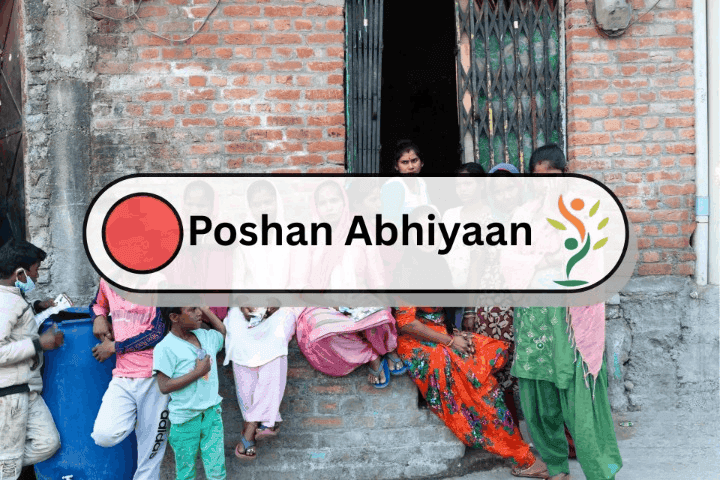
On the 8th of March, 2018, the PM of India launched the Poshan Abhiyan Scheme (पोषण अभियान) or National Nutrition Mission in the Jhunjhunu district of Rajasthan.
This comprehensive program is expected to address the nutritional challenges that face our country with a specific focus on the nutritional status of adolescent girls, pregnant women, lactating mothers and children between the ages of 0-6 years. Through technology-driven interventions, convergence among various ministries and community participation, Poshan Abhiyan aims to reduce stunting, severe acute malnutrition, anaemia, and low birth weight in underprivileged children and women’s nutrition.
The main goal is to create a healthier nation by reducing stunting in children as well as women’s malnutrition and anaemia. Moreover, the low birth weight would be minimised as it is one critical factor for the proper health of newborns. In this way, the program sets the foundations for better conditions for future generations.
Read More: Pradhan Mantri Garib Kalyan Anna Yojana (PM-GKAY).
What Is Poshan Abhiyan?
Poshan Abhiyan is a centrally sponsored scheme under the Ministry of Women and Child Development (MWCD). It seeks to reduce malnutrition in a targeted, time-bound manner by strengthening existing nutrition-related programmes such as ICDS and improving last-mile delivery.
The programme adopts a Jan Andolan (People’s Movement) approach, recognising that nutrition outcomes improve not only through government schemes but also through behavioural change, awareness, and social participation.
For aspirants, the Poshan Abhiyaan scheme UPSC remains an important topic due to its governance model, use of technology, and alignment with Sustainable Development Goals (SDGs).
Phase-wise Implementation Of Poshan Abhiyan
Poshan Abhiyan has been executed across all districts in India on a phased basis. For instance, Haryana started with Nuh and Panipat under Phase I.
Kaithal, Karnal, Kurukshetra, Bhiwani, Yamuna Nagar, Gurugram, Palwal, Rohtak, Sirsa and Sonipat were some more districts included in this initiative during Phase II.
The remaining ones were covered under Phase III, making it a complete reach in the state.
Implementing Poshan Abhiyan over several phases will be more efficient as lessons learnt from each phase are taken into account when planning subsequent ones, thus allowing for some adaptations and improvements, hence ensuring that goals are achieved most effectively.
Key Objectives Of Poshan Abhiyan
Main objectives include:
-
Prevent & Reduce Stunting among children (0-6 years).
-
Prevent & Reduce under-nutrition (underweight prevalence) among children (0-6 years).
-
Reduce the prevalence of anaemia among young children (6-59 months).
-
Reduce the prevalence of anaemia among women and adolescent girls in the age group 15-49 years.
-
Reduction in low birth weight incidence.
Read More: The National Food Security Mission (NFMS): A Comprehensive Overview
What Are The Components Of Poshan Abhiyan (पोषण अभियान)?
Before exploring individual components, it is important to note that Poshan Abhiyan functions as an umbrella mission, strengthening existing systems rather than replacing them.
Convergence Of Schemes
A defining feature of Poshan Abhiyan is convergence. Nutrition-related interventions from multiple ministries, Health, Drinking Water, Sanitation, Rural Development, and Education, are aligned under one mission framework.
This ensures that beneficiaries receive holistic support, including food security, sanitation, healthcare, and nutrition education.
Poshan Abhiyaan ICDS And Technology Integration
The backbone of Poshan Abhiyan’s monitoring system is Poshan Abhiyaan ICDS-CAS (Common Application Software).
Key highlights include:
-
Smartphones provided to Anganwadi Workers (AWWs).
-
Digital recording of height, weight, and growth indicators.
-
Real-time monitoring of beneficiaries.
The Poshan Abhiyaan data entry system allows frontline workers to upload service delivery and nutrition data regularly, ensuring transparency and accountability.
Poshan Abhiyaan Data Entry, Login And Monitoring System
Before listing technical aspects, readers should understand that the data system aims to replace paper-based records with real-time digital monitoring.
How The Data Entry System Works
-
Anganwadi Workers record beneficiary data using mobile devices.
-
Supervisors verify and review entries.
-
Data flows to district, state, and national dashboards.
The Poshan Abhiyaan data entry login portal enables officials to track progress, identify gaps, and take corrective action.
This technology-driven approach has improved efficiency, reduced duplication, and enhanced evidence-based policymaking.
Behaviour Change Communication (BCC): A Jan Andolan
Poshan Abhiyan recognises that nutrition is not only about food availability but also about awareness and practices.
Behaviour Change Communication focuses on:
-
Infant and young child feeding practices.
-
Maternal nutrition.
-
Hygiene and sanitation.
-
Diet diversity.
Community engagement ensures that behavioural change sustains beyond government intervention.
Incentives For Frontline Workers
To encourage quality implementation, Poshan Abhiyan includes performance-based incentives for Anganwadi Workers, ASHAs, and supervisors.
These incentives:
-
Improve motivation.
-
Promote accurate Poshan Abhiyaan data entry.
-
Enhance service delivery outcomes.
Capacity Building And Training
The scheme uses an Incremental Learning Approach (ILA) to train field workers through structured modules.
Key focus areas include:
-
Growth monitoring.
-
Nutrition counselling.
-
Use of digital tools.
-
Community engagement.
This continuous learning model ensures adaptability and skill enhancement.
Grievance Redressal Mechanism
Poshan Abhiyan includes a dedicated grievance redressal system, including call centres and escalation mechanisms. This allows beneficiaries and workers to report issues related to service delivery or technical challenges.
Read More: Learn How PM-GKAY Helps Supply Free Food To Migrants And The Poor In India
Community Events Under Poshan Abhiyan
Before understanding their significance, it is essential to note that community events strengthen grassroots ownership.
Key Events
-
Annaprasan Diwas.
-
Suposhan Diwas.
-
Village Health Sanitation Nutrition Days (VHSND).
Additionally, Poshan Pakhwada and Poshan Maah campaigns mobilise mass participation and awareness.
Role Of Men And Community Participation
Recent campaigns have focused on increasing male participation in nutrition awareness, recognising the role of family decision-makers in improving nutrition outcomes.
Impact And Progress So Far
Since its launch, Poshan Abhiyan has:
-
Improved growth monitoring coverage.
-
Enhanced digital tracking of beneficiaries.
-
Increased convergence at district and block levels.
While challenges remain, the mission has strengthened India’s nutrition governance framework.
Challenges In Implementation
Despite progress, Poshan Abhiyan faces challenges such as:
-
Digital literacy gaps among frontline workers.
-
Connectivity issues in remote areas.
-
Data accuracy concerns.
Addressing these issues remains critical for long-term success.
For students, the Poshan Abhiyan scheme UPSC is important due to:
-
Governance innovation.
-
Federal coordination.
-
Use of technology in welfare delivery.
Understanding Poshan Abhiyaan ICDS, convergence, and data systems is crucial for prelims and mains.
Conclusion
Poshan Abhiyan represents a paradigm shift in India’s approach to nutrition governance. By combining technology, behavioural change, and inter-ministerial coordination, the scheme holistically addresses malnutrition.
While effective implementation remains key, Poshan Abhiyan lays a strong foundation for a healthier India. With continued political commitment, community participation, and improved digital systems like Poshan Abhiyaan data entry login, the mission can deliver lasting nutrition outcomes for future generations.
For more details, you can visit the official government site and learn the details of the government scheme fighting malnutrition in India.
Frequently Asked Questions
0

0
3k
0
0
3k Views
0

No comments available


