Domicile Certificate 2026: Apply Online, Documents Required & State-Wise Process | Jaagruk Bharat
Updated: 03-06-2026 at 12:30 PM


17k
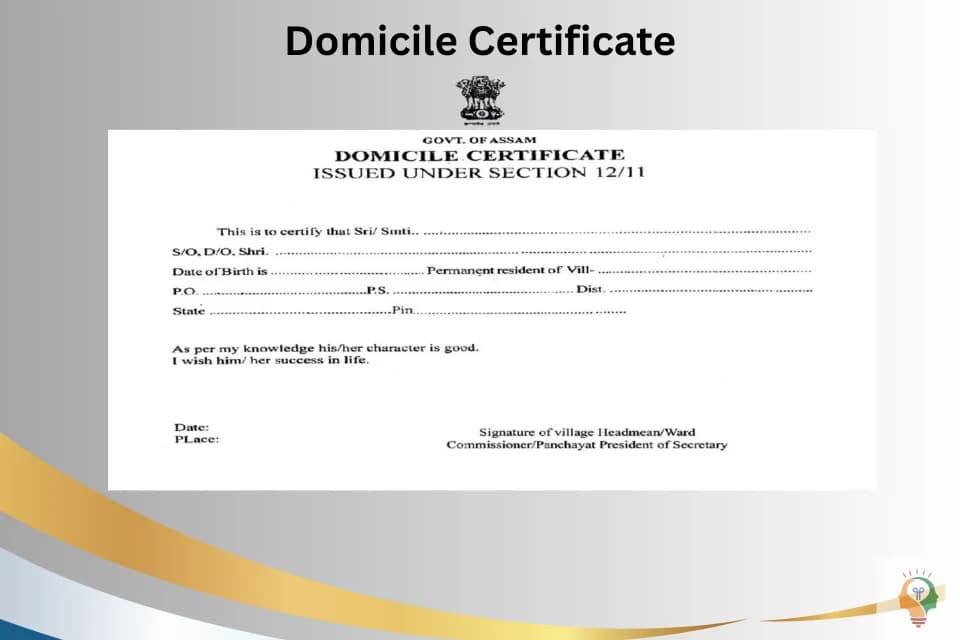
There are a total of 29 states in the country of India, and the need for a domicile certificate, arises from the requirement of proving residency status. A domicile certificate, also known as a Niwas Praman Patra is an official certificate issued by the state government departments. With the help of this certificate, individuals can prove their residency status in a particular state for innumerable reasons and benefits, like eligibility to apply for a government scheme launched by a particular state government, avail reservation quotas, secure seat-specific seats in educational institutes, etc.
Read the article to learn more about the domicile certificate. It comprises certain important details about the individual applying for the card and helps them avail of state-specific benefits. The article will also answer your queries concerning ‘How to apply Domicile Certificate?’ or ‘How to cancel or correct domicile certificate?’.
Overview Domicile Certificate 2026
The table below summarises some key information about the Domicile Certificate 2026 that one should know.
| Name of the certificate | Domicile certificate. |
|---|---|
| Purpose | Introduced to verify a person’s identity and residency of people from a state. |
| Issued by | State governments. |
| Components | Applicant’s name, address, duration of residency, and state of residency. |
| Types | State Domicile certificate; District Domicile certificate; Temporary Domicile certificate. |
| Benefits | Allows people to avail themselves of state-specific schemes or services. |
| Application mode | Online via digital governance portals or offline via Seva Kendras or Common Service Centres. |
| Domicile certificate processing time / how many days | One to two weeks. |
Read More: Caste Certificate
What Is A Domicile Certificate? (Meaning & Purpose in 2026)
A domicile certificate is an official document issued by the government that verifies a person’s residency in a particular state or union territory. The government certificate serves as proof of residency that the individual can use to avail of all the state government schemes and services. It provides a huge help to people from the vulnerable or marginalised sections of society looking to access govt schemes.
The process of applying for a domicile certificate is also simple and can be completed through both online and offline platforms, as per their convenience. The domicile certificate not only establishes an individual’s residency in a particular state but also ensures that they can avail of all local benefits and rights made for them.
Domicile Certificate Affidavit Format
The usual domicile certificate affidavit format is mentioned below in brief points:
-
Personal information of the certificate holder, like name, gender, date of birth, etc.
-
Information about the applicant’s parents or guardians.
-
Permanent residential address.
-
Educational or employment-related details of the applicant.
-
Signature of the applicant and the authorities.
Types Of Domicile Certificate In India
The major classification of the domicile certificate is mentioned below in tabular format:
| Type of Domicile Certificate | Description |
|---|---|
| State Domicile Certificate | Issued to those who are permanent residents of a particular state. |
| District Domicile Certificate | Issued to people to prove residency in a specific district. |
| Temporary Domicile Certificate | Issued to people living in a specific state for a temporary period. |
Other significant types of a domicile certificate are laid down in detail below for one’s reference:
-
Domicile by Birth
Domicile by birth, also called domicile by origin, is the type of domicile that one gets because they were born there. One can get this type of domicile even when one of their parents, particularly the father, is from a particular state.
-
Domicile by Choice
One can apply for this type of domicile when they voluntarily decide to make a place their permanent home. To obtain this type of domicile certificate, one must be living in the state for a considerable amount of time, like 10 or 15 years.
-
Domicile of Dependence
Domicile by dependence is provided to those individuals who prove that they are legally dependent on someone else and can therefore be eligible to receive a domicile on the domicile status of the said person.
Read More: Voter ID
Who Needs a Domicile Certificate? (Eligibility & Uses)
People usually apply for a domicile certificate for various purposes. Some of the common reasons why one needs a domicile certificate are described below in brief points:
-
People apply for a domicile certificate for government job / exam purposes. One can use a domicile certificate when trying to clear competitive or recruitment-related entrance examinations organised by a state government authority.
-
Students usually apply for a domicile certificate for admission / college purposes, as many educational institutions keep some seats aside for people holding permanent residency in the state. Having domicile certificates in such instances increases their chances of securing a seat in this highly competitive time.
-
State government authorities run various scholarship programs for students having permanent residency of the state. To reap their benefits, it is essential for the candidates to procure a valid and legal domicile certificate through legitimate means.
Benefits Of A Domicile Certificate
There are various benefits of domicile certificates that help people in various ways. Some of the major benefits of the government certificate are:
-
Access to government schemes: People through domicile certificates can avail of various state government schemes and programs.
-
Educational opportunities: People with the help of domicile certificates can apply for state quotas for admission purposes in various educational institutions.
-
Jobs: Domicile certificates help people apply for quota-based government jobs in specific states.
-
Proof of residence: Domicile certificates serve as an official document that verifies people’s local state residency status.
Eligibility Criteria For Domicile Certificate 2026
Interested applicants first need to ensure whether they fit the eligibility criteria or not. The eligibility criteria are as follows:
-
Applicants must be a resident of a state for at least 6 months to 5 years (varies from state to state).
-
Minors should be accompanied by their parents or guardians.
-
Applicants must be a citizen of India.
Read More: Ration Card
How To Apply For Domicile Certificate Online In 2026?
Interested and eligible individuals can apply for domicile certificates through both online and offline platforms as per their convenience. Both the processes of application are broken down below in steps for one’s better understanding and clarity.
Step-by-Step Online Application Process
Step 1: Visit the official website of your state government to begin the process of Domicile Certificate online application process.
Step 2: Navigate to the ‘domicile certificate’ option.
Step 3: Fill out the application form and upload all the required documents.
Step 4: Apply and note the application number for reference.
How To Apply Offline (Tehsildar / Revenue Office)?
Step 1: Visit the local revenue office or the related government office of your state.
Step 2: Request an application for a domicile certificate.
Step 3: Fill out the application form and upload all the required documents.
Step 4: Submit the form to the concerned authority and collect the acknowledgement receipt.
State-Wise Domicile Certificate Application Guide 2026
The rough outline of the application process of state-specific variants: UP domicile certificate, Maharashtra domicile, Delhi domicile, and of major other states is described below, so that you can have an idea about the specifics of the application process for a domicile certificate 2026.
UP Domicile Certificate – Apply On edistrict.up.gov.in
Step 1: Please visit the official website of e-district portal, managed by the state govt authorities of Uttar Pradesh.
Step 2: Register on the portal using your personal information, like your name and mobile number.
Step 3: After successful one-time registration, log in to the portal and find the service of Domicile Certificate from the list of services.
Step 4: After clicking on the relevant option, fill in your details in the application form and upload the scanned copies of all the required documents.
Step 5: Recheck the information filled in the form and the quality of documents uploaded. If everything seems fine to you, proceed to pay the nominal application fee and submit your application.
Maharashtra Domicile Certificate – Apply On Aaple Sarkar
Step 1: Please visit the official website of Aaple Sarkar, navigate to the ‘Citizen Services’ section, and then register yourself using your basic personal details, like email ID and phone number.
Step 2: After registration, log in to the portal using your recently set-up credentials, go to the Revenue Department section, and then click on the ‘Domicile Certificate’ option.
Step 3: Enter the details mentioned in the application form, like your personal information, address-related information, etc.
Step 4: Upload the scanned copies of all the supporting documents. Make sure the contents of the documents are clearly visible.
Step 5: Pay the application fee, after which your application will be considered successfully submitted on the portal.
Delhi Domicile Certificate – Apply On e-District Delhi
Step 1: To start the application process, visit the E-district portal of Delhi from any of your devices.
Step 2: Register yourself on the portal and then log in using those same credentials.
Step 3: Find the option concerning ‘Domicile Certificate’ and click on it. Fill in the application form of the same, upload the copies of the required documents, and recheck everything before clicking on ‘Final Submit’. The portal will not ask you to pay any fee as Delhi’s government does not charge anything for the processing and issuance of a domicile certificate.
MP Domicile Certificate – Apply On MPOnline
Step 1: Please visit the official website of Madhya Pradesh’s e-district portal and register yourself if you are a first-time user of the site.
Step 2: After registration, log in using your credentials and navigate to the option related to the domicile certificate.
Step 3: The system will show you the application form for the same. Enter your details carefully and then move on to uploading the supporting documents to complete the application process.
Step 4: Recheck the information filled in the form and then proceed to pay the application fee.
Rajasthan Domicile Certificate – Apply On Emitra
Step 1: Please visit the official website of the eMitra portal. Register on the portal using your personal information, and then log in using the same credentials.
Step 2: Find the option related to the domicile certificate and start entering your information in its application form.
Step 3: Upload the scanned copies of all the required documents, review all the information filled in the form and the clarity of the documents attached, and then pay the applicable fee for the same.
Bihar / Karnataka / Gujarat (Other States)
The rough outline of the application process remains the same even for other states, like Bihar, Karnataka, Gujarat, etc. Usually, any individual wanting to apply for a domicile certificate via online means needs to visit the official e-governance portals of their respective state governments. Register on the portal, log in, find the relevant service, fill in the application form, attach the supporting documents, pay the nominal application fee, and that’s how the application process usually goes.
For those who would like to apply for the certificate using offline measures, please take the help of the Common Service Centers (CSCs) or government-established Seva Kendras.
Documents Required For Domicile Certificate
Applicants need to submit certain required documents to successfully apply for the government certificate. The list of domicile certificate documents is as follows:
-
Identity Proof Documents
-
Address Proof Documents
-
Bank Passbook.
-
Utility Bills.
-
Additional Documents
-
Self-Declaration Form.
-
Passport Size Photograph.
How To Check Domicile Certificate Application Status?
Applicants can check the status of their application forms for domicile certificates by visiting the state government’s website or by contacting the local authorities through the number on their acknowledgement receipts. The online process of checking the domicile certificate status is as follows:
Step 1: Please visit the official digital governance portal of your respective state governments.
Step 2: Log in using your credentials, like your mobile number, and then find the options concerning ‘Tracking Application Status’. Under such generic options, you will find the exact options of ‘‘Domicile Certificate Status’. Click on it.
Step 3: Enter your Application Reference Number (ARN) that you must have received at the time of application. After cross-checking your entered information, the system will fetch the status of your applications for a domicile certificate 2026.
How To Download Domicile Certificate Online?
Applicants can also download the digital copies of their respective domicile certificates by following the steps mentioned below:
Step 1: Please visit the official digital governance portal of your respective state governments and log in using your details, such as your mobile number.
Step 2: After logging in to the portal, find the option concerning ‘Domicile Certificate Download’ and click on it.
Step 3: Enter your Application Reference Number and download the digital copies of your domicile certificate in PDF format to your devices.
Domicile Certificate Validity & Renewal Process
Usually, a domicile certificate remains valid till one’s lifetime. However, some departments require people to submit recently issued certificates for security purposes. In such cases, renewal is required to be done. The process of renewal is as follows:
Step 1: Please visit the official digital governance portal of your respective state governments and log in using your details, such as your mobile number.
Step 2: Find the option concerning ‘Renewal of Domicile Certificate’ and select it.
Step 3: The portal will ask you to enter some information, such as your present domicile certificate number and its scanned photo.
Step 4: If you would like to cancel or correct domicile certificate, please enter the information that you want updated. Upload the scanned copies of the documents supporting your changes.
Step 5: Recheck the details entered in the domicile certificate renewal form, and if everything is correct, pay the nominal fee via any of the online payment methods, like UPI (Unified Payment Interface), credit or debit cards, etc., and wait for approval from the authorities.
How Long Is A Domicile Certificate Valid?
The domicile certificate validity period usually remains valid till one’s entire life, meaning there is no need to renew it. However, it may need to be renewed or updated in case of any changes in residency or personal details, or if any institution requires a recently issued domicile certificate.
Fees & Processing Time By State (2026 Updated)
The estimated application fee and processing time are mentioned below in brief for one’s reference:
| Name of the state | Approximate application fee in Rupees | Usual processing time |
|---|---|---|
| Uttar Pradesh | Rs 10 to Rs 20. | 7 to 14 working days. |
| Maharashtra | Rs 20 to Rs 50. | One or two weeks. |
| Delhi | No fee charged. | 7 to 14 working days. |
| Madhya Pradesh | Rs 20 to Rs 50. | 7 to 14 working days. |
| Rajasthan | Rs 20 to Rs 40. | One or two weeks. |
| Bihar | Rs 10 to Rs 30. | One or two weeks. |
| Karnataka | Rs 25 to Rs 50. | One or two weeks. |
| Gujarat | Rs 20 to Rs 50. | 7 to 14 working days. |
What Is The Fee For A Domicile Certificate?
The exact domicile certificate fees in India vary from one state to another. However, in most states, the fee usually ranges from Rs 10 to Rs 50 or 100, not more than that. The fee is extremely nominal, making it not a burden on anyone. Some states even provide domicile certificates without any cost.
Can I Apply For A Domicile Certificate Online From Any State?
Yes, one can apply for a domicile certificate even if they are not physically present in the state for which they need the domicile. This is primarily enabled now with the introduction of online application procedures, all done via the electronic governance portals. One can fill out the application form online, upload required documents online, and even pay the application fee online, eliminating the need for physical visits to government offices.
Can A Student Apply For A Domicile Certificate?
Yes, students can apply for a domicile certificate provided that they fulfil all the conditions of eligibility for the same. If the student is a minor. i.e., under the age of 18 years, they can get domicile certificates on the basis of their parents' domicile status.
Is A Domicile Certificate The Same As A Residence Certificate?
No, a domicile certificate is not the same as a residence certificate. Key differences between a Domicile Certificate and a Residence Certificate are laid down below:
| Component | Resident Certificate | Domicile Certificate |
|---|---|---|
| Meaning | An official document that helps an individual prove that they are currently living in the state. | A domicile certificate is a legal document that proves the fact that a person has been living in the state for a considerable amount of years. |
| Purpose | The main purpose is to prove one’s current address. | The main purpose is to establish a permanent residency in the state. |
| Issued by | Issued by the Tehsildar / Sub-Divisional office. | Issued by the District Magistrate, or some other officer from the revenue department of the state. |
| Stability | Can be changed as one changes their location. | Comparatively stable and permanent. |
| Used for | Used for address check for local verification. | Can be used for availing various benefits, like admission in state-based educational institutions, fee concessions, etc. |
| Can it be used for accessing reservation benefits? | No, a residence certificate cannot be used for accessing reservation benefits. | Yes, domicile is enough for availing of reservation-related benefits. |
| Verification level | Comparatively, simple and faster. | Verification process is much more detailed and strict. |
Common Reasons For Rejection & How to Avoid Them?
State government authorities have tried to make the process of applying for and procuring domicile certificates as straightforward and quick as possible. However, people still face a lot of errors, primarily due to their ignorance.
Some of the common mistakes that people make and their solutions are listed below so that you can stay aware of them and not make the same mistakes when applying for a domicile certificate:
-
One of the most common mistakes is putting incomplete details in the application form for a domicile certificate. Incomplete information can lead to rejection of applications, which leads to another hassle of applying all over again. The only solution to this is to be vigilant when entering personal details in the application form. Review everything once again before making the final submission of the form.
-
Another common mistake made by applicants is uploading unclear, outdated, or expired documents or documents with inconsistent information. Such documents will lead to rejection of forms because authorities would not be able to properly verify the individual’s details. Therefore, when uploading the supporting documents at the time of application, amke sure they are clearly visible, updated, and in sync with each other.
-
At times, applicants face a range of technical problems, like unresponsive website leading to timeouts, failed payments, etc. In such cases, please do not worry, wait for a little while and if the website is still frozen, close the browser and log in to the site again, preferably at early mornings or late noon.
Conclusion
A domicile certificate is an official government certificate that proves an individual’s residency in a particular state. Its use is varied, it can be used for accessing various state-specific schemes and services, for accessing reservation-related benefits, for proving one’s permanent residency to access institute-specific services like education or job. Check the eligibility today and apply for the certificate as soin as possible as it can come in handy for various purposes.
Stay updated with Jaagruk Bharat to get the latest information on government healthcare schemes and more, and reach out to us via our community page if you have any questions.
Why Choose Jaagruk Bharat To Apply For A Domicile Certificate?
Allow Jaagruk Bharat to help you and apply for a Domicile Certificate on your behalf in just a few clicks! Get 24/7 support, expert assistance, online services, and a hassle-free application Process with Jaagruk Bharat.
Frequently Asked Questions
0

0
17k
0
0
17k Views
0

No comments available


