Can You Claim For Compensation In Events Of Railway Accidents?
Updated: 16-01-2026 at 5:30 PM


4k
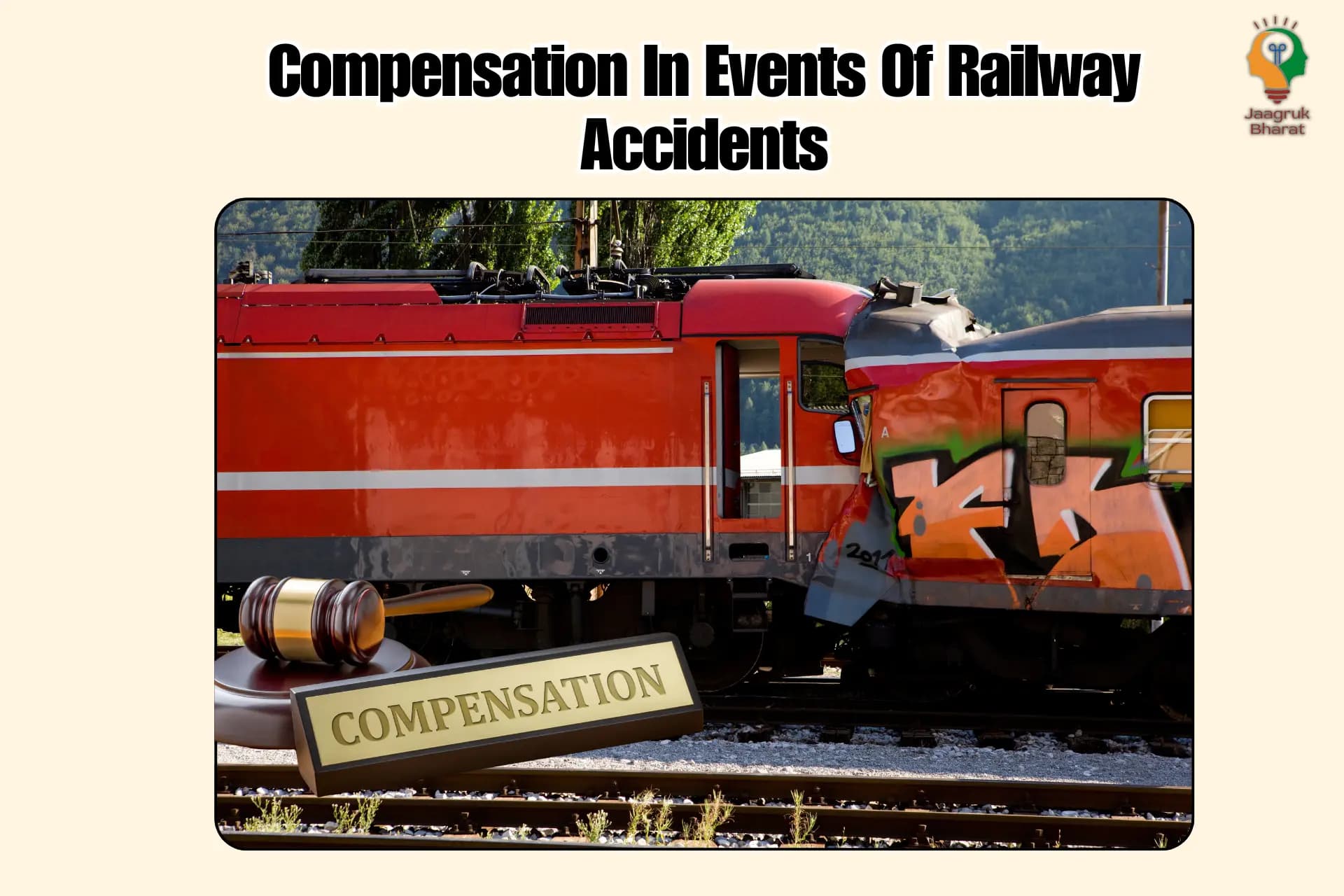
Railway accidents are not a common occurrence; however, their impact lasts for a long time. The victims who either die or get injured due to these are left scarred and financially crippled in most cases. In such events, the victims and their families must be provided with some sort of compensation from the authorities against the loss of lives that they can apply for following the railway accident claim India procedure.
The Indian law indeed provides for the claiming of compensation by victims of such incidents. In many cases, the central, state, or local government announces compensation for such victims. However, if you are wondering whether there are statutory provisions, we are here to clear all your doubts through this article.
Read the article to learn more about the railway compensation rules, ranging from their meaning and provisions in the law to railway accident compensation eligibility and the process of claiming compensation, including answers to popular questions, like ‘Can you claim compensation for railway accidents?’.
Overview
The table below summarises some key details about the railway compensation rules that one should know.
| Rules concerning | Indian Railway Accident Compensation Rules |
|---|---|
| Law | Section 124 of the Railways Act, 1989 |
| Can you claim compensation for railway accidents? | Yes, one can claim compensation under Section 124 of the Railways Act, 1989 |
| Railway accident compensation eligibility | Injured passengers, guardians of a minor, dependents, if the passenger dies |
| Maximum amount of compensation | Rs. 8 lakh for death or permanent disability and Rs. 7.2 lakh in cases of injuries |
| How to file railway accident compensation claim? | Offline by sending the application with supporting documents to the Registrar, the Additional Registrar, or the Assistant Registrar as per Section 5 of the Railway Claims Tribunal (Procedure) Rules, 1989. |
Read More: Did You Get Your Refund After Cancelling Your Train Ticket?
What Are The Indian Railway Accident Compensation Rules?
Section 124 of the Railways Act, 1989 provides for maintenance of action and recovery of damages or compensation in the following events:
-
In events of operating a railway, an accident occurs,
-
Either a collision between trains where passengers are being carried by the train/s,
-
Derailment,
-
Or any other accident to a train or any part of a train carrying passengers,
-
Regardless of negligence, wrongful act, or default on the part of the Railways.
The Indian Railways is strictly liable to pay compensation and damages to pay the bonafide passengers in the following instances:
-
death as a result of accidents,
-
personal loss and injury,
-
destruction,
-
damage or deterioration of goods owned by the passenger and accompanying him in his compartment or on the train due to such an accident.
Read More: Indian Railways Directed To Pay 1 Lakh To Passenger For Negligence, Bag Stolen During Journey
The explanation of this Section in the Act also describes who is included under ‘passengers’. The following are counted as passengers:
-
Railway servant on duty,
-
A person who has purchased a valid ticket for travelling by a train carrying passengers, on any date, or a valid platform ticket, and becomes a victim of an untoward incident.
The legal position on the payment of compensation for railway accidents was made clear in the case of Rathi Menon v. Union of India, where the Court opined that the compensatory sections in the Railways Act of 1989 are not for the benefit of the administration but for the speedy recovery of the victim passengers.
Read More: Can’t Find a Confirmed Train Ticket Booking? Try This
Who Can Claim Railway Accident Compensation?
The Bonafide passengers can apply to the Railway Claims Tribunal, which has jurisdiction over the area where the incident occurred or where the complainant/claimant resides. The railway accident compensation eligibility is as follows:
-
A person who has sustained the injury or suffered any loss, or
-
Any agent duly authorised by such person on his behalf, or
-
Where such a person is a minor, by his guardian, or
-
Where death has resulted from the accident, by any dependent of the deceased or where such a dependent is a minor, by his guardian.
How To Claim Railway Accident Compensation Before The Railway Tribunal?
The railway accident claim procedure to file a claim is mentioned below in detailed points for one's better understanding:
Step 1: An application to the Tribunal has to be made in Form I, Form II, or Form III, either by the applicant in person, by an agent, or by his duly authorised legal practitioner in the office of the Registrar, the Additional Registrar, or the Assistant Registrar as per Section 5 of the Railway Claims Tribunal (Procedure) Rules, 1989.
Step 2: Applications for claiming railway compensation for injury or railway compensation for death can also be sent by postal or electronic mode to the office of the Registrar, the Additional Registrar, or the Assistant Registrar of the Bench concerned in a triplicate.
Step 3: The application sent through e-mail must also provide hard copies along with originals or duly certified true copies of originals by registered post to the Registrar, Additional Registrar, or the Assistant Registrar.
Step 4: The applicant may present a receipt slip in Form IV, with his application signed by the Registrar or the officer receiving the application on behalf of the Registrar in acknowledgement.
How Is The Amount Of Compensation To Be Given Determined?
The prescribed railway accident compensation amount for injury is Rs 7.2 Lakhs, which is the maximum limit, and for death or permanent disability, it is Rs 8 Lakhs. In case there is a delay in the payment of compensation, interest is applicable on the amount from the date of the claim application.
In Union of India v. Radha Yadav, the Supreme Court held that if the amount so calculated is less than the amount prescribed on the date of the award of the Tribunal, the claimant will be entitled to the higher of the two amounts.
How To Get Interim Relief For Railway Accidents?
Interim relief is a temporary relief that is granted while the claims of final compensation are being settled. The process to claim it is given below:
-
A medical report, postmortem report, and death certificate are required in case of death.
-
A copy of the FIR is required in case of death or injury.
-
Provide documentary proof, such as a valid ticket of the victim’s passenger on the train on the date of the accident / untoward incident.
-
File the case for interim relief in the appropriate railway tribunal.
-
Fill out the form for interim relief, attach the above-mentioned copies of the documents, and submit them to the Chief Commercial Manager(‘CCM’) of the railway under whose jurisdiction the accident took place.
-
If interim relief is not sanctioned within 15 days from the date of submission of the request from the CCM/Chief Claims Officer’s office, contact the Deputy CCM of the railway.
Conclusion
Railway accident compensation is an unfortunate type of right that every passenger has and every passenger can exercise under the Railways Act of 1989. This law has been made by the parliament of India, especially for the passengers who put their trust in the railway system and choose it for travelling every single day. Therefore, it is the responsibility of the railways as well to protect their passengers, especially when they experience unfortunate accidents which lead to injuries and, at times, death. The laws ensure that all those passengers who have suffered injuries and disabilities do not have to suffer more by having to prove the how and why behind their injuries and harm.
However, many victims are unaware that they are entitled to compensation, and this is also their right under the law. We request that all of you thoroughly educate yourselves about the provisions of Section 124 of the Railways Act, 1989, which specifically governs the maintenance of action and recovery of damages or compensation. It is definitely one of the aims of the railway sector to prevent accidents, but it is the passengers’ responsibility as well to be aware of all their legal protections.
Stay updated with Jaagruk Bharat to get the latest information on government schemes and more, and reach out to us via our community page if you have any questions or want to share your thoughts.
Frequently Asked Questions
0

0
4k
0
0
4k Views
0

No comments available


