Mother & Child Protection Card (MCP) 2026: Benefits, Eligibility, Download & How to Get | Jaagruk Bharat
Updated: 16-06-2026 at 3:30 PM


12k
One of the most critical phases of a person’s life is their childhood, and one of the most critical phases of a woman’s life is during and after their pregnancy. The expecting mother must take care of herself and the life growing within her to avoid any sort of complications later, which can be fatal to her life and the child’s. However, the reality is far from the ideal. Around 1.3 million maternal deaths occurred between the years 1997 and 2020; there aren’t merely numbers but the lives of women who were bringing new life to the world.
To never face such statistics and to improve the lives of mothers and their children, the government of India launched the Mother and Child (MCP) Card. The government card was introduced to provide a protective shield to mothers and their children so that they can safeguard themselves in the initial critical years to later lead a healthy life without developing any vulnerability to serious illnesses.
Read the article to learn more about the card for mother and children’s health, ranging from its meaning and the MCP card benefits in Hindi to eligible people who can apply for it and the detailed application process.
Read More On What Are The Top Government Schemes For Pregnant Women In India?
Mother & Child card Overview
The table below summarises some key details about the MCP card that one should know.
| Name of the card | Mother and Child (MCP) Card. |
|---|---|
| Launched by | Government of India. |
| Launched in | 2009. |
| Objective | To improve and safeguard the lives of mothers and their children, especially in children’s early years of development. |
| Benefits | Quality healthcare, prenatal and postnatal care, vaccination, etc. |
| Eligibility | Pregnant and expecting women and children under the age of 5 years. |
| Application mode | Offline via public health centres or anganwadi centres. |
Condition Of Mother And Child In Society
India is known worldwide for its culture and tradition and is steady on the ladder of development. The condition of mothers and children has improved significantly, especially in urban areas, but many rural and remote areas continue to struggle. There has been a significant drop in maternal mortality rates, which came down from 387 in the year 2000 to 96 in 2020.
However, women residing in rural and remote areas face complications during and after childbirth due to various factors like limited infrastructure development, poor connectivity, inadequate quality of healthcare services and professionals, etc. One of the contributing factors is literacy and awareness, as well as the fact that many mothers still choose home deliveries rather than visiting the hospitals.
Children aren’t vaccinated at the right time, which they develop vulnerabilities to serious illnesses and diseases later in their lives. Other factors, such as malnutrition, poor hygiene, and lack of clean drinking water, contribute to their abnormal and unhealthy development. India is on a path of improvement and is working to enhance the quality of essential services, regardless of where an individual is from.
What Is the MCP Card? (Mother & Child Protection Card Explained)
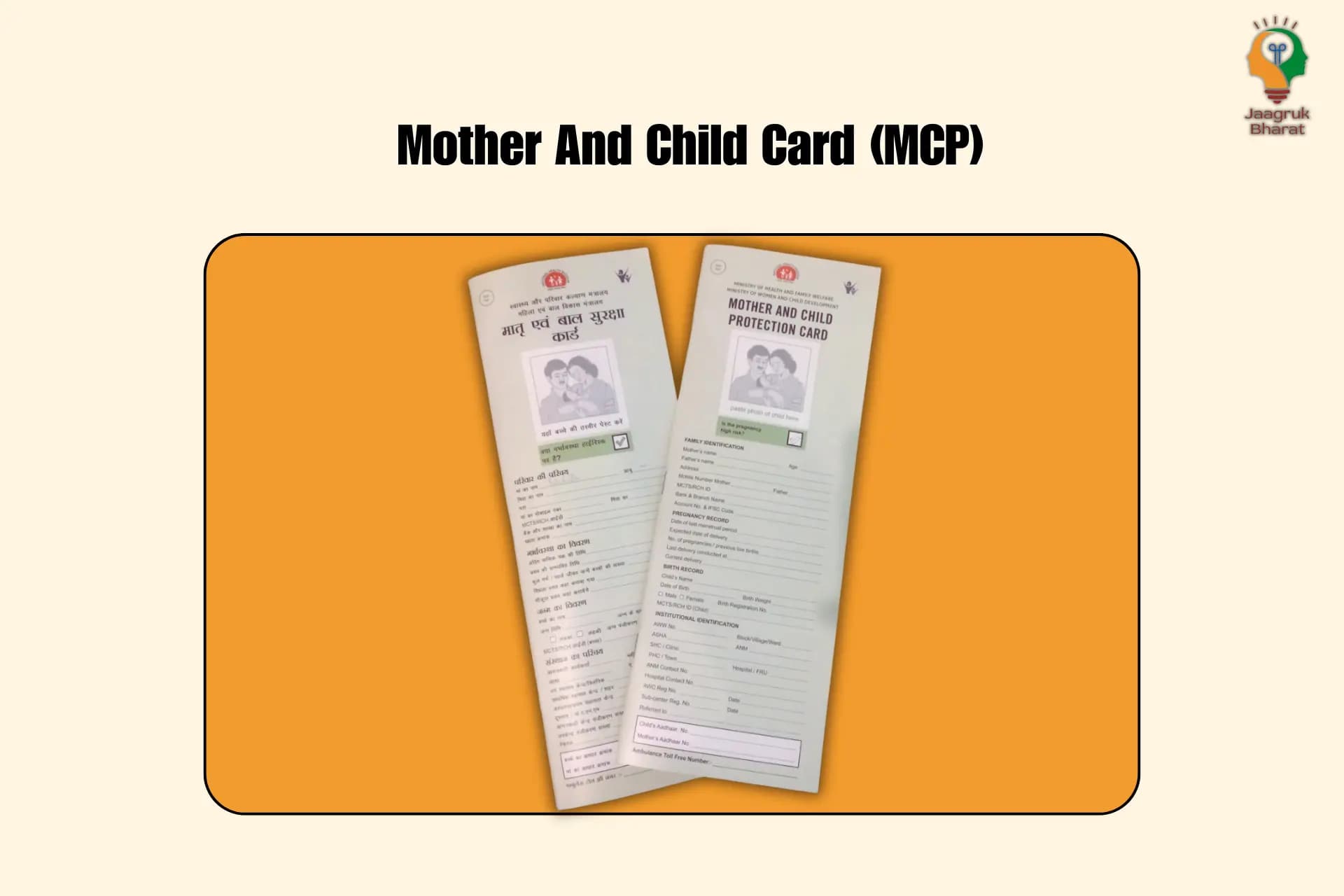
The Mother and Child (MCP) Card is a card launched by the Ministry of Health and Family Welfare and the Ministry of Women and Child Development under the National Health Mission in the year 2009 to help monitor the health and well-being of mothers and children from pregnancy to early childhood. The card is issued to pregnant women and comprises important information related to a woman’s pregnancy, delivery, growth of the child, vaccination, etc.
The card helps medical professionals in tracking the health of both mother and child so identity any threats or vulnerabilities, if any, to deal with them at an earlier stage before they become much more serious and life-threatening. The card also works as an awareness tool as it has educational information for mothers, like tips on antenatal care, breastfeeding, proper intake of nutrition, developmental milestones, and overall preventive healthcare measures.
Read More: LaQshya Programme
Uses Of The MCP Card
The Mother and Child (MCP) Card is an essential tool that is designed to help both mothers and children during the critical period of their lives. There are innumerable uses of the card, such as:
-
Improved access: Through the MCP Card, beneficiaries can easily access various essential services like healthcare for both mothers and children.
-
Vaccination: The MCP Card helps mothers take care of all vaccinations that a child must take at the correct intervals of time.
-
Nutrition: The MCP Card also comprises dietary information for mothers and young children so that neither of them faces the risk of malnutrition.
-
Other govt schemes: The card is also linked with other govt schemes that ensure that eligible mothers can reap its benefits.
What Information Does The MCP Card Contain?
The Mother and Child (MCP) Card comprises some key information for both mothers and healthcare facilities. Let us have a look at all of them.
-
MCP card unique ID number NRHM: Every Mother and Child Card is assigned a unique registration or identification number at the time of registration.
-
Antenatal care: Details of the mother’s health check-ups and risk factors during pregnancy.
-
Birth Information: Record of place and type of delivery, weight at the time of birth, and the baby’s APGAR score.
-
Immunisation: Vaccination schedule for both mother and child at the correct intervals.
-
Nutritional status: Provides guidance on supplements, diet, and feeding practices for mothers.
-
Growth monitoring: Tracks the physical and psychological growth of the child.
-
Danger signs during pregnancy: The card also comprises information concerning danger signs during pregnancy that mothers should be alert to. These danger signs can be in various forms and signals, like excessive bleeding, swelling of the face and hands, severe headaches, blurred vision, high fever, reduced fetal movement, convulsions, etc. These signs can help women notice complications at an earlier stage, so that they can be treated early as well.
-
Exclusive breastfeeding guidance MCP: The MCP card also provides detailed guidance on breastfeeding practices to young mothers. Important practices, such as starting breastfeeding soon after the birth of the baby, breastfeeding for a minimum period of 6 months, avoiding feeding things, like water, honey, animal milk, etc., to the baby, and others.
MCP Card Colour Pages
One thing to note concerning the Mother and Child Card is the colour-coded pages. The card has various sections divided using various colours for ease and quick understanding of medical professionals and other healthcare workers.
The exact colours and sections vary slightly from one state and edition to another. Some of the common pages are described below in brief for one’s reference:
-
Pink section: The section in colour pink is to track the mother’s health during pregnancy. This section has details, like antenatal checkups, expected delivery date, average blood pressure, haemoglobin levels, weight, reports of other tests, etc.
-
Red section: The red section indicates warning signs and emergency conditions, like blood loss, severe swelling, high fever, convulsions, etc., that need the immediate attention of doctors.
-
Yellow section: The yellow coloured section is dedicated to nutrition-related information for both mother and child. It comprises details on balanced diets, what to eat and what not to eat, breastfeeding practices, etc. This section is designed to ensure the good health of both mothers and their newborn babies.
-
Green section: The green coloured section is to track the growth and development of the newborn baby. It has growth charts, information on developmental milestones as achieved by the child, and other relevant details.
-
Blue section: The section in blue has immunisation-related information for both mothers and children.
-
White section: White coloured section has general health-related information, like caring for a newborn, hygiene practices, etc., for parents so that they can raise their children with full awareness.
Read More: Balika Samridhi Yojana
Key Benefits Of The MCP Card For Mothers & Newborns
There are innumerable benefits that are unlocked with the help of a Mother and Child card, some of which are described below in detailed points. Let’s have a look at them one by one:
-
The primary benefit of possessing a Mother and Child card is the consolidation of all the relevant information concerning mothers' and children’s health in one place through one document. This one card has all the significant pregnancy-related information, such as reports of various tests, antenatal checkups, and information concerning the health of newborn babies, like immunisation.
-
Pregnancy is one of the most vulnerable periods of a woman’s life, wherein they constant care and attention. However, many women do not get to experience this primarily due to their socio-economic backgrounds and monetary limitations. With the help of MCP cards, such women who come from low-income backgrounds are provided with all the essential services and aids that they deserve for the good health of not just their babies but them too.
-
One of the key benefits of the Mother and Child card is the efficient tracking of vaccines that every child is supposed to receive. This helps the parents and medical professionals in keeping a note of the vaccines already given to the child and the ones that are left, so that they can be protected against some major diseases.
-
Another one of the benefits of the Mother and Child card is the early identification of any risk factors in the course of a woman’s pregnancy. The card also educates pregnant women about danger signs and warnings that they should not ignore. Early identification of such warning signs can help the mothers and the doctors in taking the necessary steps so that the condition does not deteriorate further.
Steps To Improve Immunisation Coverage
One can improve the immunisation coverage provided under the Mother and Child (MCP) Card through the following ways.
-
Awareness campaigns: Increasing awareness about the importance of vaccination in both rural and urban areas can be of great help.
-
Schools and Anganwadi centres: Spreading awareness through places like schools and Anganwadi centres helps spread awareness about vaccination.
-
Digital messages: Occasional messages about the need for vaccination can educate people as well.
-
Reinforcement: Offering some rewards to families after every vaccination of their child can be a great aid in improving the coverage of vaccination.
Mother & Child Vaccination Schedule Under MCP Card 2026
With the help of the Mother & Child Card, pregnant women and their children are provided with the necessary vaccines under the country’s Universal Immunisation Programme (UIP). Following the child immunisation schedule India 2026, infants are vaccinated from birth till they are around 16 to 24 months. The vaccines immunise them against around 13 major diseases.
A rough breakdown of the schedule based on the type of vaccine is mentioned below in brief:
-
UIP Vaccination Schedule for the year 2026: Vaccines like BCG, OPV-0, and Hepatitis B are started from a child’s birth. From 6 weeks onwards, babies are provided with doses of DTwP, IPV, Hib, PCV, Rotavirus, and Hepatitis B, followed by booster shots at 16 to 24 months. The vaccines mentioned above are compulsory and should be given to every child who is born in India.
-
IAP Vaccination Schedule for the year 2026: The IAP vaccination schedule comprises all the vaccines under the Universal Immunisation Programme, along with other vaccines, like Influenza starting at 6 months, Varicella (chickenpox), Hepatitis A, Typhoid Conjugate Vaccine (TCV), and MMR. these vaccines are especially given to babies living in urban areas of the nation.
For a detailed understanding of the child immunisation schedule India 2026, please visit the official website of the Ministry of Health and Family Welfare.
Antenatal Visit Schedule: 4 Check-ups Explained
Under the MCP Card, registered mothers are entitled to receive 4 antenatal check-ups at the following times:
| Visit | Duration | Description |
|---|---|---|
| First Antenatal Visit | 0 to 12 weeks. | Antenatal checkups, expected date of delivery, regular monitoring of blood pressure, haemoglobin, and the conduction of various tests like urine tests, etc. |
| Second Antenatal Visit | Between 16 to 24 weeks. | Healthcare workers assess the mother’s weight, B.P, nutritional status, and overall health. |
| Third Antenatal Visit | Between 28 to 32 weeks. | During this period, the focus is on the fetus’s growth and the identification of any complications in the pregnancy so that they can be treated at an earlier stage as well. |
| Fourth Antenatal Visit | Between 36 to 38 weeks. | In the last antenatal checkup, doctors check the baby’s position, check fetal movements, and based on that, they make a plan for the delivery so that they can prepare for any situation that might occur at the time of giving birth. |
Who Is Eligible For The MCP Card?
Only a certain category of people can apply for this card. The eligible categories of people for the Mother and Child (MCP) Card are as follows:
-
Pregnant women.
-
New mothers.
-
Children under the age of 5 years.
-
Priority is given to women and children from the economically disadvantaged section of society.
How To Get The MCP Card: Step-by-Step Application Process
Eligible women and children can apply for obtaining this card through an offline platform. The Anganwadi MCP card registration process is broken down below in steps for one’s better understanding:
Step 1: Please visit any government hospital, Primary Health Centre (PHC), or any Anganwadi centre and request the staff member working there to assist you with the application process of the postnatal care MCP card.
Step 2: Provide your personal and pregnancy-related details to the staff member so that they can fill them in the records to create a maternal health profile for you. Also, provide the staff member with copies of the original documents.
Step 3: Review the information filled in by the staff member in the registration form for the postnatal care MCP card, and if everything seems right to you, request the staff member to submit the form on your behalf.
MCP Card PDF: Can You Download The Mother & Child Protection Card?
Applicants are also given the option to download their respective postnatal care MCP card after its issuance. The process of the MCP card download is as follows:
Step 1: Please visit the official website of the National Health Mission (NHM) or the portal of your state’s health department.
Step 2: Find options concerning ‘Mother Child Protection Card PDF’ and click on it.
Step 3: Enter the information asked by the portal, after which the system will show you the soft copy of your Mother and Child Card. Download it on your device in PDF format and use it as and when necessary.
Read More: Palna Scheme
Documents Required To Apply For The MCP Card
Applicants need to submit some supporting documents to successfully apply for an MCP Card. The list of documents is as follows:
-
Proof of identity, like an Aadhaar card.
-
Proof of residence, like utility bills.
-
Pregnancy confirmation slip.
-
Bank account details.
Government Schemes Linked With The MCP Card
The Mother and Child (MCP) Card is linked with several other central government-run schemes to help mothers and children as much as possible. Some of the popular schemes that are linked with this Mother Child Protection Card are mentioned below in detail points for one’s clarity:
-
Janani Suraksha Yojana MCP card link (JSY): The government of India launched a scheme called the Janani Suraksha Yojana under the implementation of the National Health Mission (NHM). The main aim of the scheme is to ensure safe delivery conditions for pregnant women and to reduce the mortality rates of pregnant women and infants. The government scheme provides a range of benefits, such as financial assistance for the same.
-
Pradhan Mantri Matru Vandana Yojana (PMMVY): The Pradhan Mantri Matru Vandana Yojana is a maternity-related initiative introduced by the government of India for the welfare of not just pregnant women but lactating women too. The scheme provides financial support to registered beneficiaries for a smooth prenatal and postnatal period. Cards like the PMMVY MCP card required for a mother registration for the scheme.
-
Pradhan Mantri Surakshit Matritva Abhiyan (PMSMA): The Indian government launched a special scheme for new mothers called the Pradhan Mantri Surakshit Matritva Abhiyan. Under this particular scheme, pregnant women are provided with a range of supportive services, like access to quality medical care, especially during the second and third trimesters, regular health checkups, etc. The government scheme also helps in the early detection of any problems so that they can be treated at an earlier stage to prevent further damage.
-
Janani-Shishu Suraksha Karyakram (JSSK): The Janani-Shishu Suraksha Karyakram is a maternal and child healthcare initiative launched by the government of India. The primary objective of the Sarkari Yojana is to ensure that new mothers and their infants can have access to quality medical care, irrespective of their socio-economic backgrounds.
Read More On Pradhan Mantri Suraksha Bima Yojana (PMSBY)
Conclusion
The Mother and Child (MCP) Card is an invaluable healthcare tool launched by the government of India to ensure that mothers and children are taken care of when they are, especially during the most sensitive phases of their lives. The card is not designed just for the fulfilment of one purpose but many purposes. It helps women during their pregnancy, after the birth of their newborn babies, and educates families concerning guidelines for the care of the infant in the early phases.
The card also helps in establishing better communicative measures among various medical professionals, like doctors and healthcare workers, so that they can all help pregnant women and their families effectively without any miscommunication. Family planning is something that is still not taken as seriously by parents in India as they should.
Cards like these raise awareness about various things that soon-to-be parents should be aware of much before attempting to get pregnant. It is a reminder that child rearing starts way before the child is born!
Stay updated with Jaagruk Bharat to get the latest information on government healthcare schemes and more, and reach out to us via our community page if you have any questions.
Frequently Asked Questions
0

0
12k
0
0
12k Views
0

No comments available


