Ration Card Scheme 2025: Features, Benefits, Impacts, Eligibility
Updated: 09-10-2026 at 8:34 AM


15k
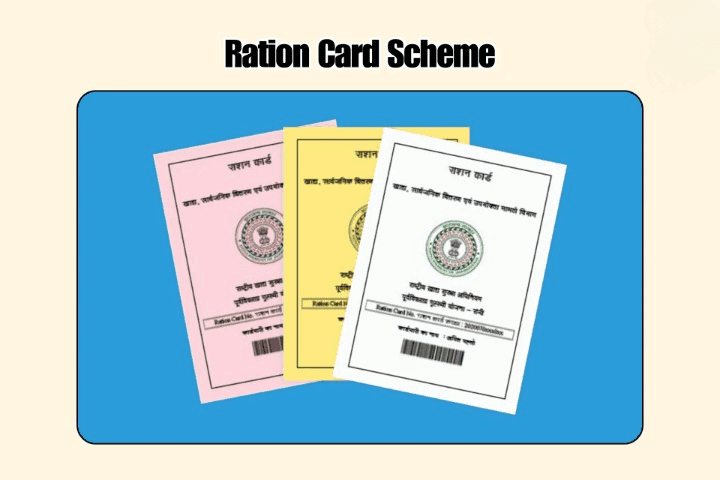
The government of India launched a scheme called the Ration Card Scheme, which is one of the most significant welfare initiatives for the citizens of India, especially those who come from the economically marginalised sections of society. The scheme is implemented under the National Food Security Act (NFSA), and every state has its respective related portals, like Ration Card Delhi. The primary aim of the scheme is to provide essential food grains and other commodities to people at subsidised rates so that no one in India sleeps hungry.
Under the latest government orders for the Ration card scheme, free ration would henceforth be availed only to select families. This strategic move is made to help the best resource allocation and reach out to those in dire need.
Read the article to learn more about the E Ration Card Delhi, ranging from objectives and eligibility criteria, including information about the One Nation One Ration Card scheme.
Overview
The table below summarises some key details about the Ration Card Delhi that one should know.
| Name of the scheme | Ration card scheme |
|---|---|
| Launched by | State government of Delhi |
| Objective | To provide food grains and other essential commodities to people at subsidised rates |
| Mode of application | Ration Card Delhi online apply 2025 and offline |
What Is The Ration Card Scheme?
The Ration Card Scheme is a government welfare scheme, implemented under the National Food Security Act (NFSA), and part of the Public Distribution System (PDS), which enables people from marginalised and vulnerable groups to access essential food grains, like wheat, rice, and sugar. The price is subsidised so that every individual in the country can purchase essential food grains and other essential commodities.
Read more: Ayushman Card
Types Of Ration Cards
There are various types of ration cards. Some of them are mentioned below in brief points for one’s reference and clarity:
-
Antyodaya Anna Yojana (AAY) Card: Issued to the poorest households so that they can access food grains at very low prices.
-
Below Poverty Line (BPL) Card: This card is issued to people who fall below the poverty line, offering a fixed quantity of food grains at subsidised rates.
-
Above Poverty Line (APL) Card: This card is issued to people who are above the poverty line to purchase food grains at comparatively higher rates than AAY and BPL cardholders.
-
Priority Household (PHH) Card: The cards are issued to the respective families who fall under the specific, pre-determined income criteria.
Also read: What Are The New Ration Card Rules Effective From September 2024?
Key Changes And How They Impact You?
Quality of Benefits
Introduction with Quick Notes around Top Benefits: The Ration Card Scheme ensures that eligible families receive essential food items every month, contributing to food security and better nutrition. The key benefits include:
-
Monthly Supply: Eligible families receive essential food items like wheat, rice, pulses, sugar, and salt.
-
Economic Relief: Reduces the burden of food expenses on impoverished families.
Read more: eShram Card
Eligibility Criteria
Interested individuals are required to fulfil all the eligibility criteria of the scheme to start the Ration Card online apply process. The criteria are as follows for one’s better understanding:
-
The government scheme is designed for families below the poverty line (BPL) and other vulnerable groups identified by the government.
-
The revised eligibility criteria ensure that only marginalised communities receive the benefits of the ration card scheme.
Read more: Death Certificate
Features Of The Ration Card Scheme
Some of the government scheme’s key features that one should know to have a fuller understanding of the Ration Card Delhi are as follows:
-
Monthly Allocation: Each eligible person is entitled to 5 Kg of ration per month.
-
Nutritional Support: The food items provided are staple items essential for a balanced diet.
-
Extended Benefits: The provision of free rations, initially reinforced during the COVID-19 pandemic, is set to continue for another year.
Read more: EWS Certificate
Documents Requirements
There are some documents that the applicants are required to attach while completing the Ration Card online apply Delhi process. The list of those documents is:
-
Proof of Identity (Aadhaar Card, Voter ID, etc.)
-
Proof of Address (Utility Bills, Ration Card, etc.)
-
Income Certificate or BPL Certificate
-
Passport-sized photographs
Read more: UDID Card
How To Apply For The Ration Card Scheme?
Applicants can apply for the state government scheme by following both the offline and Ration Card Delhi online apply 2025 processes of application, as per their preference and convenience. The process of application is mentioned below in a step-wise manner for one’s clarity.
Online
Step 1: Visit the Official Portal: Access the state-specific government website of NFSA gov In Ration Card Delhi for ration card applications.
Step 2: Create an Account: Register by providing your mobile number and email address.
Step 3: Fill in the Application Form: Enter personal details, upload required documents, and choose your nearest ration shop.
Step 4: Submit the Application: Review your details and submit the form. An application reference number will be provided for tracking purposes.
Step 5: Check Application Status: Use the reference number on the official portal to monitor the Ration card status Delhi.
Offline
Step 1: Visit the Nearest Ration Card Office Delhi: Go to your local authorised ration shop or Ration card office Delhi handling ration card applications.
Step 2: Collect the Application Form: Obtain the physical form and fill it out with the necessary details.
Step 3: Attach Required Documents: Include photocopies of the required documents along with your application form.
Step 4: Submit the Form: Hand over the completed form to the official at the ration shop or government office.
Step 5: Check Application Status: You can visit the office or check the Ration card status Delhi via the official government website using the reference number provided upon submission.
Also read: BPL Ration Cards: An Asset For Marginalised Communities In India
How To Apply For The Ration Card Scheme Benefits?
One can apply for the ration card to reap its benefits by following the steps mentioned below for one’s clarity:
-
Visit your nearest authorised ration shop.
-
Provide relevant papers proving that you meet the criteria.
-
Fill in your application form and submit it so that it can be processed.
Read more: Marriage Certificate
Duration and Distribution of Benefits
There are numerous benefits to the Ration card scheme. Some of the popular benefits of the scheme are as follows:
-
Monthly Allocation: Every qualified person will get 5 Kg of ration per month.
-
Extended Benefits: Initially reinforced during the COVID-19 pandemic, this provision of free rations is set to continue for another year under the current regulations.
-
Financial Support: As the food grains are provided at subsidised rates, it allows people from vulnerable groups to save more.
-
Other Welfare Schemes: Individuals with a ration card can apply for other government schemes and enjoy subsidies such as LPG, health programs, and educational schemes.
-
Social Protection: The ration card scheme protects people in the hard phases of life such as during unemployment, inflation, etc.
Read more: Marriage Certificate
Ensuring Rightful Distribution
The new eligibility criteria for ration cards mean that the government wants a more effective targeted distribution of rations. These include:
-
Verification Process: Thorough checking of the socioeconomic backgrounds of applicants before awarding them such cards is necessary.
-
List of Beneficiaries: The public list can verify themselves and provide transparency within societies, as well as on the beneficiaries list page on the ADFS site.
-
Enhanced Transparency: By mandating aadhar card linking and biometric verification, the government aims to increase transparency between the people of India and the government offices.
-
Digitisation: The government has also integrated technology and has made it easy for people to apply for ration cards from their homes.
-
Grievance Redressal System: An organised grievance redressal system ensures that consumers can access a unified platform for filing complaints.
Read more: Marriage Certificate
The Rationale Behind the Changes
These changes on Ration Card News aim at achieving some set objectives and aim. The primary reasons behind the changes are laid down below in brief points:
-
Enhanced Efficiency: The system can function more effectively by streamlining who gets the aid.
-
Fair Distribution: Ensuring that only those who meet the updated criteria benefit from the scheme.
-
Resource Management: Better management of government resources through the removal of any possible fraud committed therein.
Read more: Jeevan Pramaan Certificate
Conclusion
The Ration Card Scheme is one of the most significant and precious initiatives that every state government, like Delhi, runs. The government scheme not only provides essential food grains and commodities to people who cannot afford them, but also provides them with a psychological safety net that every individual should feel.
Keep tabs on official notifications on Jaagruk Bharat to stay updated and ensure that your family qualifies for the Ration Card scheme eligibility criteria 2024 to keep receiving food allowances. Also, join our community page to share your opinions and queries.
Frequently Asked Questions
0

0
15k
0
0
15k Views
0

No comments available


