What To Know About The Positive Pay System For Cheques?

Updated: 28-02-2026 at 3:30 PM


2k

Serving Over
500K+ Users


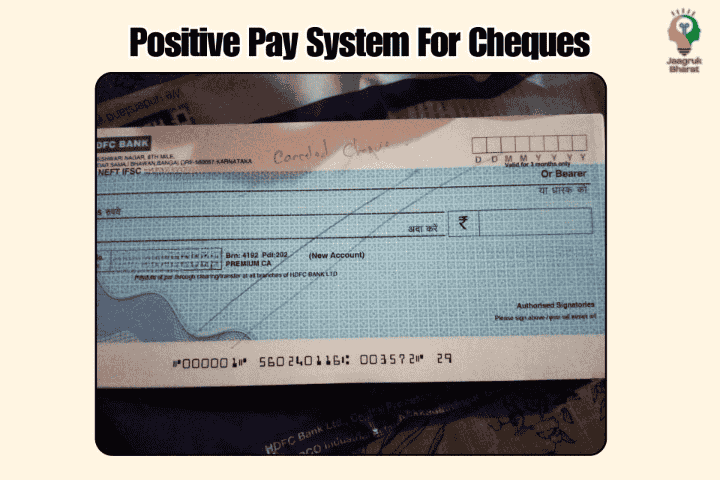
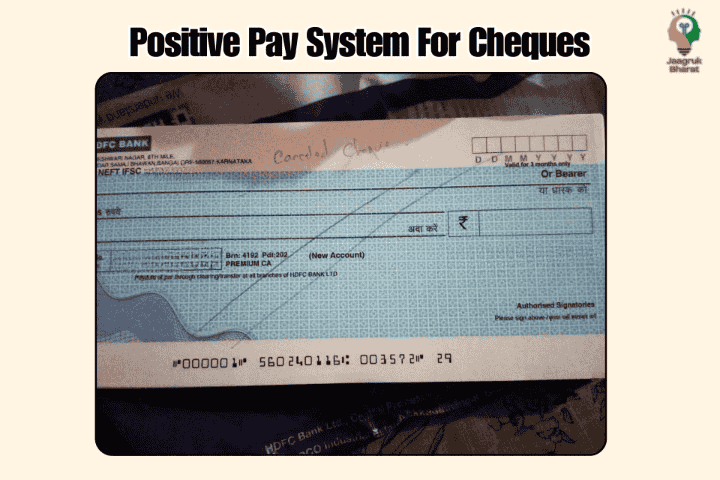
Cheque payments remain an important mode of transaction in India, especially for businesses, institutions and high-value personal payments. However, cheque-related fraud, including alteration of payee name, amount tampering and forged signatures, has long posed risks to account holders and banks. To tackle these vulnerabilities, the Reserve Bank of India (RBI) introduced the Positive Pay System India, a structured verification process that enhances cheque safety.
The RBI cheque security system works by enabling banks to cross-check cheque details shared by the issuer before clearing the instrument. This additional step significantly reduces the possibility of fraudulent alterations and unauthorised encashment. The system is particularly useful for high-value cheques, where even minor discrepancies can lead to substantial financial loss.
In this detailed guide, we explain the RBI positive pay system details, how it functions, how to register, the latest updates, and why it is considered one of the most effective cheque fraud prevention mechanisms in India.
Read More: RBI Introduces Faster Cheque Clearing Process: Closing In On NEFT And RTGS Speed
Overview
The table below summarises the key components of the Positive Pay System for cheques, helping you understand its structure and purpose at a glance.
| Particulars | Details |
|---|---|
| System Name | Positive Pay System |
| Introduced By | Reserve Bank of India (RBI) |
| Objective | Prevent cheque fraud and tampering |
| Applicable To | High-value cheques (threshold decided by banks, often ₹50,000 and above) |
| Information Required | Cheque number, date, payee name, amount, account number |
| Mode of Submission | Internet banking, mobile banking, SMS, and branch visit |
| Verification Method | Bank matches submitted details with the physical cheque |
| Outcome | A cheque is cleared only if the details match |
| Purpose | Strengthen the cheque security mechanism |
This framework forms a crucial part of the RBI’s broader bank cheque positive pay guidelines aimed at increasing trust in paper-based financial transactions.
Latest News
The Reserve Bank of India has continuously refined the RBI cheque security system to align with evolving banking technologies. In recent updates, banks have streamlined cheque clearing timelines, bringing them closer to the speed of digital transfers such as NEFT and RTGS.
Many banks now mandate the Positive Pay System for cheques for amounts above a specific threshold, commonly ₹50,000 or higher, although some banks encourage its use for lower values as well. Customers who fail to register cheque details in advance may experience delayed clearing or additional verification procedures.
Furthermore, banks have integrated the system into mobile banking applications, making it easier for customers to comply with the bank cheque positive pay guidelines without visiting branches. These improvements reinforce the RBI’s commitment to secure, efficient and transparent financial systems.
Read More: Next-Gen Reforms To Look Out For In Union Budget 2024
How Does Positive Pay Function?
Understanding how the system works helps users appreciate its importance in cheque fraud prevention positive pay initiatives.
When issuing a cheque, the drawer (issuer) must share certain key details with their bank before the cheque is presented for clearing. These details typically include:
-
Cheque number.
-
Date of issue.
-
Payee’s name.
-
Account number.
-
Cheque amount.
The account holder submits this information through internet banking, mobile banking applications, SMS banking or by visiting a branch. Once the payee presents the cheque for encashment, the bank cross-verifies the physical cheque details with the information previously submitted.
If all details match exactly, the cheque proceeds for clearing. If discrepancies are detected, such as changes in the payee’s name or amount, the bank flags the cheque and may refuse payment or seek confirmation from the issuer.
This layered verification process acts as a robust cheque security mechanism, ensuring that even if someone attempts to tamper with the cheque, the system prevents unauthorised clearance. These are key positive pay system benefits that protect both the issuer and the payee.
How To Use The Cheque Positive Pay System?
Although individual banks have slightly different interfaces, the fundamental process remains similar across institutions under the Positive Pay System India framework.
Below is an overview of how major banks implement the system:
Indian Bank Positive Pay System
Indian Bank customers can log into their internet banking portal or mobile application to register cheque details before issuance. The system ensures compliance with RBI positive pay system details and safeguards high-value transactions.
Bank of India Positive Pay System
Bank of India customers can access the feature through online banking or mobile platforms. Once details are submitted, the cheque enters the verification cycle as per RBI’s bank cheque positive pay guidelines.
Axis Bank Positive Pay System Online
Axis Bank provides a user-friendly online interface where customers can submit cheque details digitally. The Axis Bank Positive Pay System Online simplifies compliance and supports effective cheque fraud prevention positive pay practices.
BOB Positive Pay System
Bank of Baroda (BOB) customers can register cheque details through internet banking, mobile apps or by visiting a branch. The facility enhances the overall cheque security mechanism.
Canara Bank Positive Pay System
Canara Bank customers can activate the feature via digital channels, ensuring adherence to the RBI cheque security system norms for high-value cheques.
Across banks, the core purpose remains the same: verify before clearance and prevent fraud.
Read More: Understanding RBI's New Master Directions on Fraud Risk Management
Why Is The Pay Positive System Important?
Cheque fraud can occur in several ways, including:
-
Alteration of the cheque amount.
-
Changing the payee name.
-
Forging signatures.
-
Intercepting cheques during transit.
The Positive Pay System for cheques significantly reduces these risks by requiring prior confirmation of cheque details. Banks compare the submitted data with the physical instrument before processing the payment.
This proactive approach strengthens trust between customers and financial institutions. It also reduces litigation, customer complaints and financial losses. Among the most valuable positive pay system benefits are:
-
Enhanced transaction security.
-
Reduced fraud-related losses.
-
Faster dispute resolution.
-
Improved customer confidence.
-
Alignment with digital-era banking standards.
By implementing this RBI cheque security system, the banking ecosystem ensures safer high-value transactions in a traditionally vulnerable area.
Steps To Register Cheque Details Online
If you plan to use the Positive Pay System India, follow these simple steps. This guide explains how to securely register your cheque details online and comply with bank cheque positive pay guidelines.
Step 1: Log in to your bank’s internet banking or mobile app. Ensure you have your login details with you.
Step 2: Find the 'Positive Pay System' option. This is generally found under ‘Cheque Services’ or ‘Payments.’
Step 3: Enter the cheque details required. Enter the relevant cheque number, date, payee name, amount and account number.
Step 4: Submit the information. Supply all required data regarding this matter.
Step 5: The bank records the information. When the cheque is presented, it verifies the physical details against the registered data under the RBI positive pay system details framework.
This simple process strengthens the cheque security mechanism and ensures safer transactions.
Read More: Understanding CIBIL Score: RBI Rules And How They Affect Your Credit?
Common Mistakes to Avoid While Using Positive Pay
To maximise the positive pay system benefits, avoid these common errors:
-
Entering incorrect cheque numbers or amounts.
-
Registering details after the cheque has already been presented.
-
Forgetting to register high-value cheques.
-
Using unofficial or unsecured digital platforms.
Accuracy and timely submission are crucial for effective cheque fraud prevention and positive pay protection.
Who Should Use the Positive Pay System?
While the system primarily applies to high-value cheques, it is particularly useful for:
-
Business owners issuing large payments.
-
Companies are making vendor settlements.
-
Individuals issuing property-related payments.
-
Institutions handling bulk cheque transactions.
Given the rising sophistication of financial fraud, adopting the Positive Pay System for cheques is a prudent practice for all regular cheque users.
Conclusion
The Positive Pay System for cheques represents a major advancement in India’s financial security framework. By introducing a mandatory verification layer before clearing high-value cheques, the RBI has significantly strengthened the country’s cheque security mechanism.
The system aligns with evolving banking technologies while preserving the utility of traditional cheque payments. Through proper understanding of the RBI positive pay system details, adherence to bank cheque positive pay guidelines, and timely registration of cheque information, account holders can safeguard themselves against fraud.
With increasing digital integration and stronger verification systems under the RBI cheque security system, cheque-based transactions are now safer and more reliable. Adopting this system not only ensures compliance but also delivers substantial positive pay system benefits, including peace of mind and financial protection.
For anyone who regularly uses cheques, leveraging the Positive Pay System India framework is not just advisable, it is essential for secure banking in today’s environment.
Get the latest updates on government schemes and policies with Jaagruk Bharat. Join India's biggest Jaagruk Bharat community. Share your thoughts, questions, and favourite topics with us.
Frequently Asked Questions
1

0

2k

1
0
2k Views
0

No comments available


Our Company
Home
About
T&C
Privacy Policy
Eula
Disclaimer Policy
Code of Ethics
Contact Us
Careers
Cancellation & Refund Policy
Categories
Women
Insurance
Finance
Tax
Travel
Transport & Infrastructure
Food
Entertainment
Communication
Government ID Cards
E-commerce
Traffic guidelines
Miscellaneous
Housing and Sanitation
Sports
Startup
Environment and Safety
Education
Agriculture
Social cause
Employment
Disclaimer: Jaagruk Bharat is a private organization offering support for documentation and government scheme access. We are not affiliated with any government body. Official services are available on respective government portals. Our goal is to make processes easier and more accessible for citizens.
All Copyrights are reserved by Jaagruk Bharat