GST Rate Slab 2026: Complete List (0%, 5%, 18%, 40%) | Updated

Updated: 17-03-2026 at 3:30 PM


2k

Serving Over
500K+ Users


On 1 July 2017, India implemented the Goods and Services Tax (GST), which amalgamated and complied with the tenets of numerous indirect taxes, such as VAT, excise duty, service tax, and entry tax into a single system for ease and transparency. By eliminating all these indirect taxes and unifying them into one, the government aims to reduce the tax burden that the people of India end up facing.
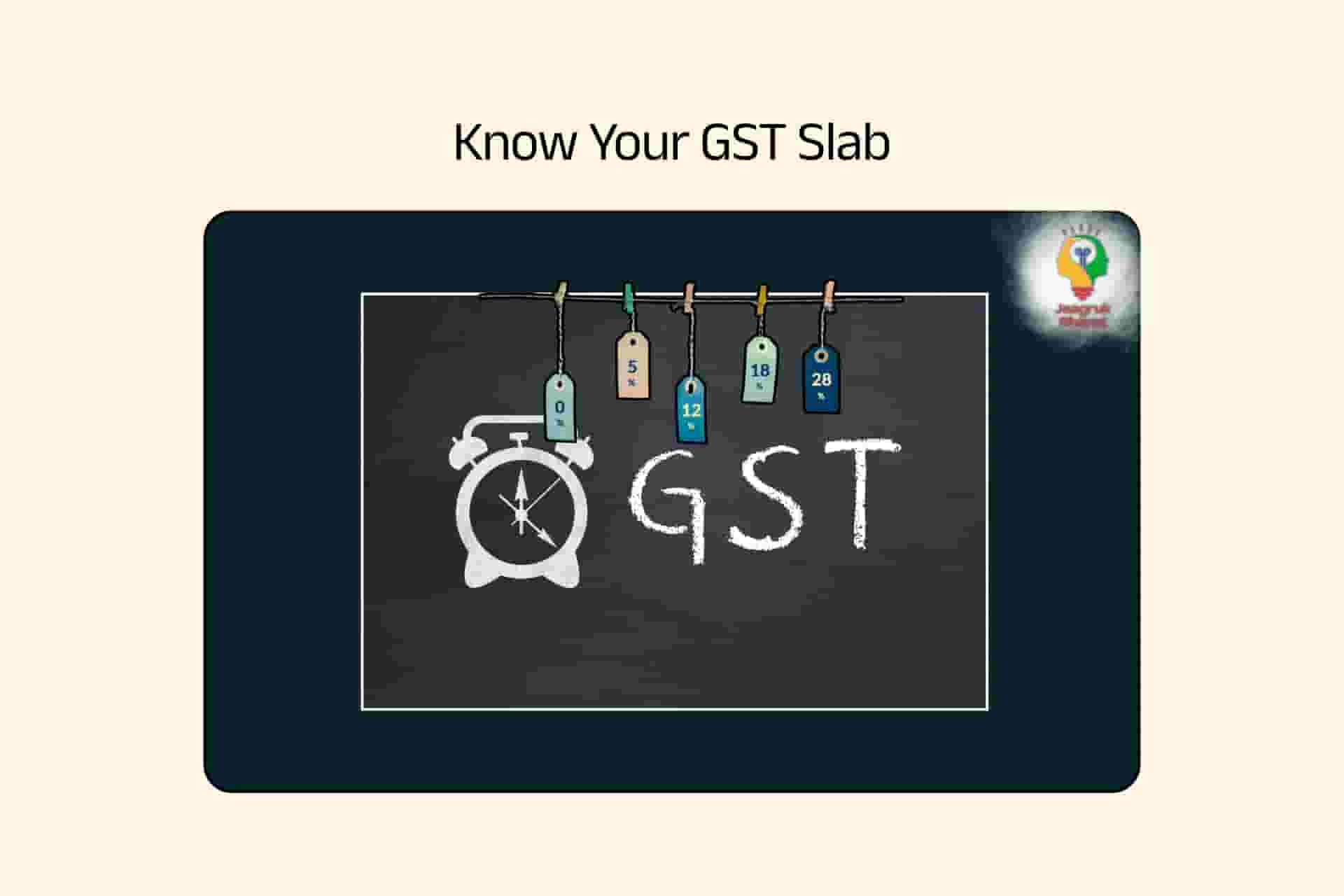
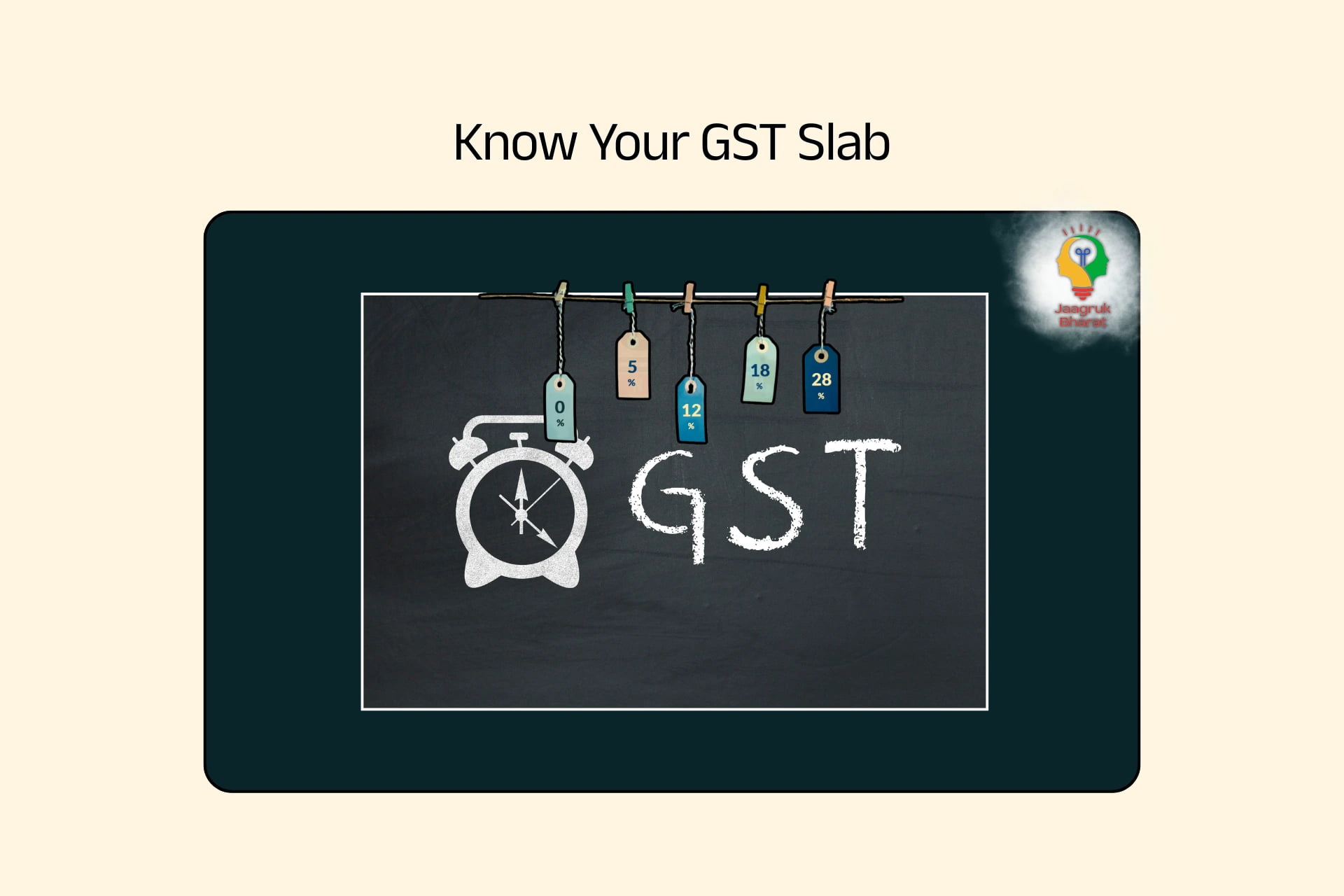
GST is a multi-stage, destination-based tax that is governed by the central and state governments. The system goes through regular revisions and amendments to keep it valid and updated over time. It consists of five main slabs: 0%, 5%, 12%, 18%, and 28%; however, with the new GST framework, these five slabs have been replaced with two main slabs and a separate slab for luxury and sin goods.
This article looks into the slabs and GST rate chart currently applied, examples of different sectors, cess on different slabs, and the overall structure of GST applied on various goods and services.
GST Overview
The table below summarises some key details about the revised GST rates along with other information that every Indian citizen should know.
| Concerning | Revised rates in GST for the year 2025 |
|---|---|
| Governing authority | Central and state government authorities |
| Replaced GST slabs | 5%, 18%, and 40% |
| Components of GST | CGST. IGST, SGST, or UTGST |
| Is GST compensation cess still applicable? | Yes, but just on some specific luxury and sin goods, like tobacco, pan masala, luxury cars, etc. |
| Technological tools | Invoice Management System, online GST portal, etc. |
| HSN or SAC system | Used for classifying goods and services with applicable tax rates |
Read More: GST Amnesty Scheme 2025- Eligibility, Benefits & How to Apply
What Are The GST Rate Slabs In India? (2025 Structure)
The Goods and Services Tax framework of India is a multi-tier slab system, which means that there are different tax rates based on the nature of various goods and services. Instead of having one single rate, the GST framework categorises goods and services into specific broad categories so that a slab rate can be assigned to them. This is done to ensure revenue generation without making taxes a burden for the taxpayers of India.
The GST slab rate system is not stable or fixed in any way; it keeps changing with time and with the dynamic needs of people. Recent changes were focused on reducing the five classification slab system to a three-tier classification system, mainly 5%, 18%, and 40% levied on luxury and sin goods. Businesses and individual taxpayers must understand all possible components of the GST slab rates, as they have the power to affect the finances of everyone. We will cover each rate slab and the goods and services that each slab covers in detail for one’s optimal and better understanding.
Complete GST Rate Slab Chart — Item-Wise (Goods & Services)
A detailed chart comprising GST slab rates for both goods and services is mentioned below in tabular format for one’s reference:
| GST rate | Category | Goods | Services |
|---|---|---|---|
| 0% (NIL) | Essential items | Fruits and vegetables, milk, eggs, bread, books, etc. | Education, healthcare, life, and health insurance services |
| 3% | Precious items | Jewellery made of gold or silver | – |
| 5% | Daily-use items | Packaged food, medicines, footwear, dairy products, etc. | Restaurants, transport services, etc. |
| 18% | Most goods and services | Electronic items, construction supplies like cement, small automobiles, etc. | Telecom, banking, IT, and other services |
| 40% | Luxury and sin items | Tobacco, cigarettes, luxury cars, aerated drinks, etc. | Casinos, online gaming, or lottery-related services |
Detailed and comprehensive information on GST rates for the year 2025 on all kinds of goods is described below in detail for one’s clarity:
1. 0% GST Slab — Nil-Rated Goods & Exempt Services
Exempted essentials cover goods and services that support basic human sustenance or livelihood. It will also be exempt from GST taxes to achieve affordability for the average man.
-
Unprocessed food: Milk, curd, fresh fruit and/or vegetable, unbranded atta, and pure honey.
-
Agriculture products: Gaga, grains, pulses, rice, and jaggery.
-
Education and healthcare: Basic functions of work.
-
Specific goods: Eggs, paneer, lassi, handloom goods, and native standard instruments.
2. 5% GST Slab — Essential Goods & Daily Use Items
Items in this slab are taxed at the lowest rates, as they are everyday items and essential services. The aim is to keep these items affordable while raising revenue.
-
Edible items: sugar, tea/coffee, edible oils, fortified rice kernels (one RBIye), popcorn (not popped), life-saving drugs.
-
Transport and facilitation: non‑AC rail, economy air, LPG cylinders.
-
Utilities: coal, building stone, fibre goods.
-
Composition scheme: Some small taxpayers pay nominal rates (1.5%, 5%, 6%).
3. 12% GST Slab — Standard Goods & Processed Foods
The slab consists of intermediate goods and processed items that are not necessities, but commonly consumed goods. It reflects affordability and provides some taxation.
-
Processed foods and beverages: condiments, fruit juices, packaged pantry items.
-
Consumer goods: bicycles, contact lenses, surgical gloves, aluminium items for the household when a fan is required, and bamboo floor.
-
Specialised construction and agricultural inputs: granite blocks, nozzles for drip irrigation.
4. 18% GST Slab — Most Goods, IT Services & Financial Services
Most goods and services are in this standard slab, which is a normal slab in the GST structure. Consumption is moderating in this slab, which includes generally semi-luxury goods and essential services, but with value added.
-
Consumer durables: GST on mobile phones, TVs (<27”), washing machines, fridges, geysers, fans.
-
Food and beverage items: caramel‑coated popcorn, chocolate, packaged meals.
-
Services: dining in an AC restaurant, telecom, IT, staying in hotels (₹1,000–₹7,500 per night), business-class.
5. 40% GST Slab — Luxury & Sin Goods (New 2025 Rate)
This highest slab is for goods and services perceived to be non-essential, luxury items, or detrimental to society (and health). It acts primarily as a revenue collection stream, but also is a type of control mechanism to limit consumption following the government's wishes regarding behaviours. This particular slab now also includes the earlier 28% GST plus cess into a single and higher tax rate, with the hopes of decreasing their use or consumption by people. Examples of some items covered under this category are as follows:
-
Luxury items: vehicles (cars, high-end motorcycles), AC tiles, wall tiles, cement.
-
Sin goods: tobacco, aerated drinks, high-end appliances.
-
Entertainment/extravagant services: gambling, water parks, 5-star stays in hotels.
GST Rates On Services — Sector-Wise Breakdown
A detailed table comprising GST rates on all kinds of services provided in India is mentioned below:
| Sector | Service | GST rate |
|---|---|---|
| Healthcare | All medical-related services | 0% |
| Education | Education-related services | 0% |
| GST rate on insurance | Premiums of various types of insurance, like health, life, and general | 18% |
| Finance | Banking-related services, like loans, debit or credit card charges, etc. | 18% |
| Telecom | Mobile, internet, DTH services | 18% |
| IT | Software services | 18% |
| Hospitality | Hotel rooms, restaurants (AC and non-AC), etc. | 0 to 18% |
| Transportation | Railways (non-AC), air travel (economy and business class), and transportation of goods | 0 to 12% |
| Real estate | Renting commercial or residential properties | 0% for residential and 18% for commercial |
| Entertainment | Theatre tickets (high and low value), gaming tickets, casinos, etc. | 12% for low-value tickets, 18% for high-value tickets, and 40% for gaming and casino tickets |
| Professional | Consultation by professionals, like CAs, etc. | 18% |
| E-commerce | Platform services, commission charges | 18% |
GST 2.0 Reforms: What Changed On September 22, 2025?
The GST Next-Gen reforms were approved and introduced at the 56th GST Council meeting. The main aim of the September 22, 2025, GST changes was to simplify the existing taxation structure and improve people’s compliance with the set laws. Some key changes that were introduced are as follows:
-
The old 5 slab system. i.e., of 0%, 5%, 12%, 18%, and 28% got condensed into fewer categorisations, mainly into 5% and 18%, with a separate 40% slab for luxury and sin goods. This was done to simplify the structure so that people can understand the classification better.
-
Tax slabs set at 12% and 28% got replaced with new GST tax slab rates of 5% and 18% to avoid people’s doubts and confusion.
-
Goods such as tobacco, aerated drinks, luxury cars, and betting-related activities were shifted under the higher tax slab of 40%.
-
Many daily-use items, like medicines and other such products, were shifted to the 5% slab rate or completely exempted to make them affordable so that people from economic classes can purchase and consume them.
-
The authorities also focused on correcting the inverted duty structure, wherein raw materials were charged more tax than finished goods. This was done by the authorities to improve cost efficiency for the industrial sector.
-
In the 56th GST Council meeting, it was also decided that GST on life and health insurance will be reduced considerably so that more and more people can buy insurance coverage for themselves and their families.
Also Read: GST Frauds in India- Types, Penalties, Cases & How to Report (2025 Guide)
GST Cess: Which Items Still Attract Compensation Cess?
Following the updated GST framework, the GST compensation cess has been removed from most goods. However, the compensation cess continues to remain functional on certain luxury and sin goods to discourage their use or consumption by the people of India, as they are either imported from foreign countries or are health-degrading. Goods that still attract compensation cess are as follows:
-
Tobacco and related products, cigarettes, cigars, etc.
-
Pan masala
-
Aerated and sugary beverages
-
Luxury motor vehicles, like expensive cars, SUVs, etc.
-
Betting, lottery, and gambling-related activities
GST Rate On Gold, Insurance, Real Estate & More
As per the updated GST slab rates of 2025, GST rates were changed for various goods and services, including goods like gold, and services like that of the insurance sector and real estate, and more. Exact changes are laid down below for one’s better understanding:
-
GST rate on gold jewellery has a specific tax rate of 3% (1.5% CGST + 1.5% SGST) and 5% making charges, and precious stones are taxed at a specific rate of .25%.
-
Most types of insurance policies, like health, life, or general, continue to attract a GST of 18%. However, people can expect some relief as authorities are discussing and working on reducing those rates or introducing new government insurance schemes so that people can enjoy the essential benefit that insurance provides.
-
Under construction properties will be taxed at 1% (affordable housing) and others at 5% without Input Tax Credit. On the other hand, ready-to-move properties will remain exempt at 0%. Commercial properties and leasing of those properties will be taxed at 18%.
-
Tobacco, luxury cars, aerated drinks, and jet fuel have cesses applied at high rates - sometimes 200% cesses.
Regulatory Updates & Recent GST Council Items
Each GST Council meeting brings updates, which can impact consumers and businesses. Changes, even if slight, can lead to expanded structural consequences as well as rate. Here is what changed recently that is worth following for 2025.
| Change Area | Description | Updated GST Rate / Reform |
|---|---|---|
| Used Vehicles | Sale of used vehicles by registered dealers now comes under GST; private sales remain exempt. | 18% applicable from late 2024 |
| Caramel Popcorn & Snacks | GST varies based on branding and packaging. | 5% (unbranded), 12% (branded), 18% (caramel popcorn) |
| Disabled Persons' Retrofits | Retrofit kits for specially-abled individuals' vehicles are made more affordable by reducing the tax burden. | Reduced from 18% to 5% |
| Renewable Energy Devices | Solar cookers, water pumps, and sprinklers shifted to a higher tax category. | Increased from 5% to 12% |
| Healthcare Drugs | Cancer-related and life-saving drugs reassessed to reduce treatment costs. | Reduced from 12% to 5% |
| Aviation Turbine Fuel (ATF) | Aviation fuel is excluded from GST to protect state revenue autonomy. | Remains outside GST |
| Compliance Reforms | Digital integration of GSTR‑3B and GSTR‑1A to reduce discrepancies and set stricter return timelines. | New 3-year return filing limit from July 2025 |
GST Structure And Compliance
The GST framework of India operates on a dual model, wherein both the central and state government authorities charge and collect taxes. This structure is established and now maintained to ensure uniformity in tax collection across the country. To properly comply with all the tax laws, businesses and individual taxpayers are not just required to understand the tax rates, but also the underlying mechanisms and rationale behind setting those particular rates.
Read More: No GST On R&D Grants To Educational Institutes- A Game-Changer For India’s Higher Education
Tri-fold Dual Model
The dual structure ensures the allocation of revenue between the Centre and the States. GST is divided into CGST / SGST / IGST split:
| Component | Full Form | Applicable On | Collected By | Tax Sharing |
|---|---|---|---|---|
| CGST | Central Goods and Services Tax | Intra-state supply of goods and services | Central Government | Shared only with the Centre |
| SGST/UTGST | State/Union Territory GST | Intra-state supply of goods and services | State/UT Government | Shared only with the respective State or UT |
| IGST | Integrated Goods and Services Tax | Inter-state supply & imports/exports of goods/services | Central Government (then apportioned) | Divided between the Centre and the destination State |
Composition Scheme GST Rates For Small Businesses
The compositional scheme under the GST framework provides easier compliance for small businesses with lower annual turnover. Instead of following the traditional and usual GST system, eligible taxpayers following the criteria of the composition scheme can pay taxes at a lower rate based on their turnover. It is particularly beneficial for small businesses, manufacturers, and service providers who can function optimally with a predictable but lower tax liability.
The exact GST percentage based on the eligible business’s annual turnover amounts is as follows:
-
For traders with an annual turnover of up to Rs 1.5 crore, the applicable GST rate is set at 1% of turnover (0.5% of CGST + 0.5% of SGST).
-
In the case of manufacturers with an annual turnover of up to Rs 1.5 crore, the applicable GST rate is set at 2% of turnover (1% of CGST + 1% of SGST).
-
When it comes to restaurants that don’t serve alcohol, the applicable GST rate is set at 5% of turnover (2.5% of CGST + 2.5% of SGST).
-
For service providers with an annual turnover of up to Rs 5 lakh, the applicable GST rate is set at 6% of turnover (3% of CGST + 3% of SGST) as per Section 10 2(A).
Composition Scheme & Input Tax Credit
The composition scheme is aimed at easier compliance for small businesses with a lower turnover. Input tax credit avoids the cascading effect of taxation on business by allowing credit for input tax.
-
The composition scheme permits a business with a turnover of up to ₹1-4 crore to apply simple tax slabs (1.5%, 5%, 6%) for tax purposes. No input tax credit can be claimed.
-
Input tax credit (ITC) allows a business to take credit for Goods and Services Tax charged on inputs to reduce tax liability by reclaiming what it had to pay to suppliers. Exclusions apply to inputs that are themselves goods, like motor vehicles, outdoor catering, etc.
Technological Compliance
Digital technology and other such mandatory systems are extremely necessary for a more simplified, structured, and organised filing of GST returns. With the adoption of technological advances for various components and processes associated with GST filing, like registration, payment of tax, claiming refunds, etc., errors have been reduced, and the operations have become much faster and more efficient. E-registration and e-filing efficiency have assisted GST compliance and leakage mitigation, furthered by adopting online tools and automated systems, some of which are described below in brief for one’s reference:
-
One of the digital solutions is the Invoice Management System (IMS), a system that plays a significant role in Input Tax Credit (ITC) reconciliation. This technological system enables the generation of GSTR-2B, an electronic statement that shows eligible goods and services for which a person can claim ITC, all based on the filings made by the supplier. This not only reduces people’s dependency on manual record-keeping but also ensures that businesses claim ITC on eligible goods only.
-
Another technological measure is the E-way bill system, which has been made mandatory for half a decade to track goods for inter-state shipments exceeding Rs 50,000 in value. The E-way bill system has been working as a valid digital process since June 2018. It gradually reduced the need for physical checkpoints and delays when goods are in transit, and enhanced the overall transport-related aspect of goods across the country. The digital system also helps the authorities in smoothly tracking and noticing any discrepancies in the movement of the goods, if any, and catch people who are committing criminal activities to evade tax.
Historical Context & Effect
The Goods and Services Tax law in India was made possible through the 101st constitutional amendment for the unique structure of indirect taxes that existed before it. It has fundamentally changed the indirect tax landscape in India. Before the introduction of GST, the country followed a very distributed and unorganised tax structure wherein central and state governments imposed and charged various types of taxes. Because of so many taxes, the system was not only disorganised but also extremely burdensome for both individual taxpayers and business entities.
With the introduction of the GST framework, which combined a variety of central and state taxes into one simplified tax and has the same logistics for the movement of goods throughout India, the system became much more organised and efficient.
-
The One Hundred and First Amendment of the Constitution of India was introduced as a bill to amend and propose the Goods and Services Tax (GST) on 8 September 2016. Nationally, GST was rolled out starting July 2017. The main benefit that was unlocked after its implementation was the removal of extra indirect taxes, such as VAT, excise duty, service tax, entry tax, and others, into one unified mechanism.
-
One of the most visible impacts of the GST framework was the eradication of state border check posts, which was also the primary reason behind the delay in the transportation of goods from one state to another. Under the GST framework, digital systems, like e-way bills and the Invoice Management System, made their way into the country to improve and increase the speed of transporting goods to and from a state. Statistics show that it helped in reducing transportation times by around 20%, which not only combatted delays faced earlier but also reduced expenses that occurred because of it.
Beyond these technical aspects that came along with the Goods and Services Tax laws, the organised system helped and will help businesses in complying with all the tax-related laws of India. The focus of the government has changed significantly when compared to olden times; it is no longer about charging taxes but about reducing the tax liability of all the citizens and industries so that taxation can no longer be a burden on anyone’s shoulders or a barrier against optimal and sustainable growth and development. With frameworks like GST, the authorities aim to reduce the instances of tax-related criminal activities, like tax evasion.
How To Check GST Rate By HSN / SAC Code?
The classification of goods and services under the Goods and Services Tax (GST) framework is based on a separate system. HSN code GST rate (Harmonised System of Nomenclature) for goods and SAC code (Services Accounting Code) for services. The HSN system is accepted worldwide, but the SCN system is only accepted and applicable in India.
One can check the HSN code GST rate, or SAC code by following some extremely straightforward steps:
Step 1: Please visit the official website of the GST portal.
Step 2: Go to the search section and search for the ‘Search HSN or SAC code’ option.
Step 3: Now, one can enter the code if they are aware, or just type the name of the product or service they are looking for, after which the system will display the correct code with the applied GST rate.
One should know that from May 2025, businesses with an annual turnover of up to Rs 5 crore were mandated to report a 4-digit HSN code, while those businesses with an annual turnover of more than 5 crore rupees will be mandated to use a 6-digit HSN code.
Read More: List Of Documents Required For GST Registration In India
Conclusion
India's GST framework is in a dynamic state, continuously evolving for the best balancing of efficiency, equity, and ease of doing business. With an intentional rate categorisation plan, increased technological usage, and government willingness to govern proactively, GST seeks to promote economic growth while providing public welfare. The ever-changing modifications and amendments are being made almost every year to ensure that the GST framework remains in line with the dynamic needs of the market and the people of India.
Looking ahead, there will be continued changes and amendments in the GST structure as per changing times and changing economic needs. Taxpayers have a responsibility to remain informed and compliant about all the related changes to the Indian taxation system, as the system cannot function properly without an adequate and correct understanding of it in people’s minds.
Get the latest updates on government schemes and policies with Jaagruk Bharat. Join India's biggest Jaagruk Bharat community. Share your thoughts, questions, and favourite topics with us.
Frequently Asked Questions
0

0

2k

0
0
2k Views
0

No comments available


Our Company
Home
About
T&C
Privacy Policy
Eula
Disclaimer Policy
Code of Ethics
Contact Us
Careers
Cancellation & Refund Policy
Categories
Women
Insurance
Finance
Tax
Travel
Transport & Infrastructure
Food
Entertainment
Communication
Government ID Cards
E-commerce
Traffic guidelines
Miscellaneous
Housing and Sanitation
Sports
Startup
Environment and Safety
Education
Agriculture
Social cause
Employment
Disclaimer: Jaagruk Bharat is a private organization offering support for documentation and government scheme access. We are not affiliated with any government body. Official services are available on respective government portals. Our goal is to make processes easier and more accessible for citizens.
All Copyrights are reserved by Jaagruk Bharat