Aadhaar Deactivation - How To Deactivate A Deceased Person’s Aadhaar

Updated: 17-12-2025 at 12:30 PM


1k
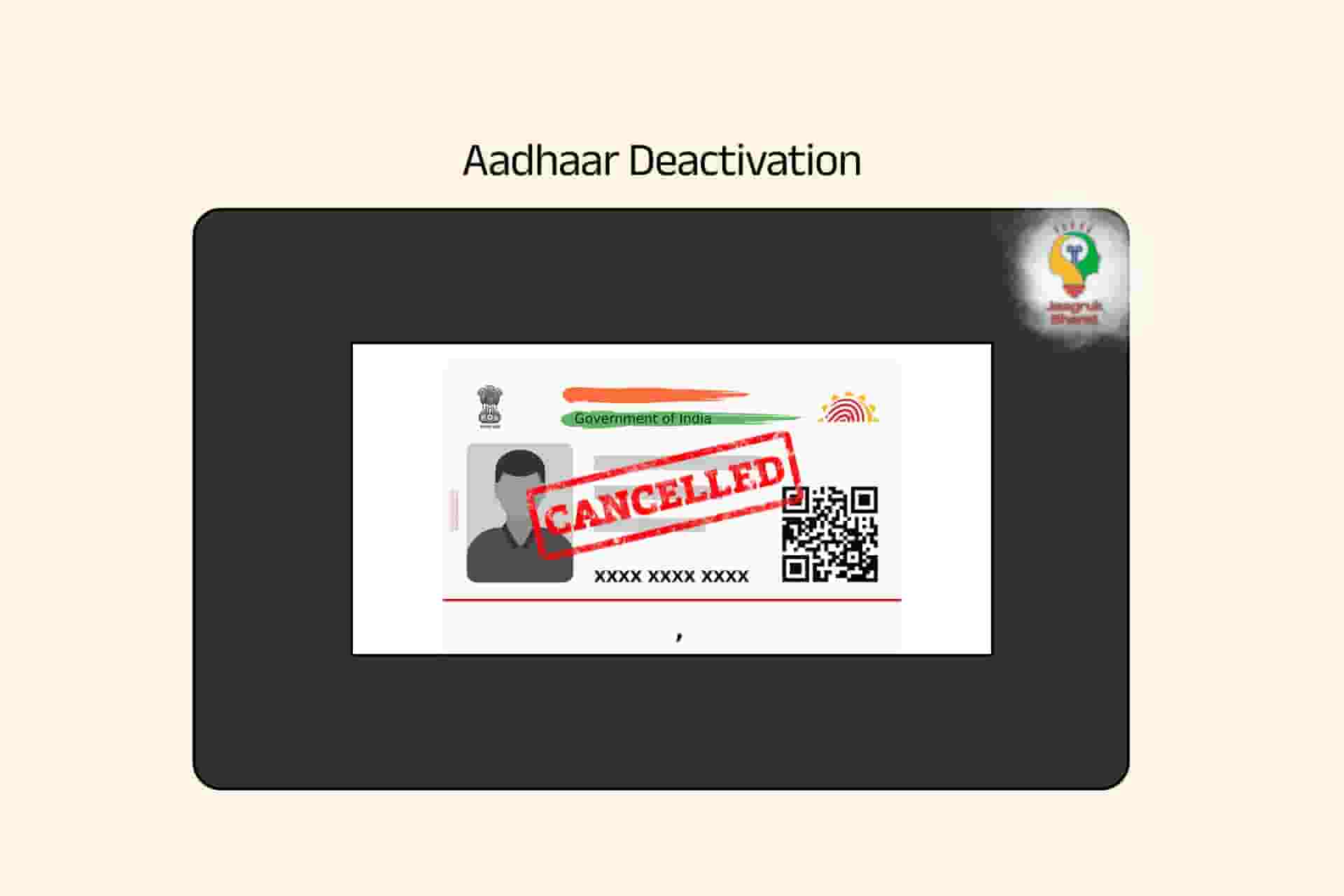
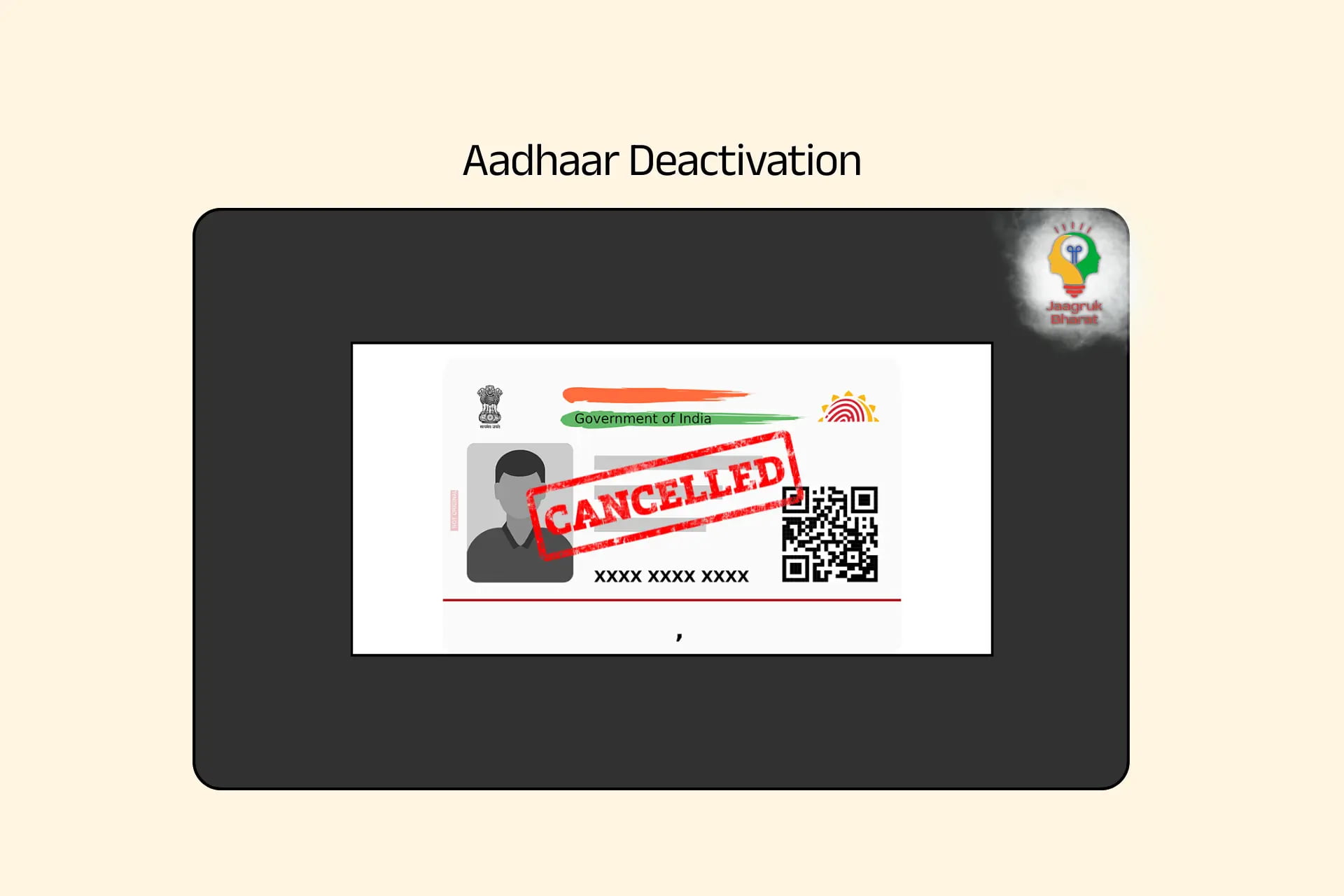



Aadhaar is one of India’s most important identity documents, linked to banking, UIDAI search, welfare schemes, mobile connections and countless everyday services. When an Aadhaar holder passes away, keeping the Aadhaar number active can expose families to serious risks such as identity misuse, financial fraud and wrongful claiming of government benefits. Aadhaar deactivation is, therefore, a necessary legal and administrative step that helps safeguard the deceased person’s identity while protecting their family from future complications.
This article explains what Aadhaar deactivation means, why it is important, the latest updates, and how family members can deactivate the Aadhaar of a deceased person through official UIDAI channels or with guided assistance from Jaagruk Bharat.
Overview
The table below gives the key insights into the Aadhaar Deactivation:-
| Item | Details |
|---|---|
| Topic | Aadhaar Deactivation (for deceased persons). |
| Who runs it | Unique Identification Authority of India (UIDAI). |
| Where to act | myAadhaar portal (online) or UIDAI facilitation centres/helpdesk. |
| Typical documents | Death certificate, ID of informant, relationship proof, family Aadhaar/phone details. |
| Typical processing time | Usually, a few days (varies with verification). |
| Purpose | Prevent identity fraud and unauthorised use of the deceased person’s Aadhaar. |
Also Read: How To Link Aadhaar To SIM Card?
What Is Aadhaar Deactivation?
Aadhaar deactivation occurs when an Aadhaar number is permanently inactivated in the UIDAI system after the cardholder’s death. Once UIDAI deactivates an Aadhaar number, no government department, bank, telecom operator, or service provider can authenticate the identity using that Aadhaar.
This step ensures that the Aadhaar number cannot be used for availing services, subsidies or financial transactions in the future. If families wish to verify the Aadhaar status, they can use the UIDAI search features available on the official portal to confirm whether the Aadhaar is active or deactivated.
It is important to note that deactivation is different from suspension or correction. While some users look for ways to reactivate a deactivated Aadhaar number, reactivation is not permitted in the case of a deceased person, as deactivation is final and legally valid.
Latest News
UIDAI has formally acknowledged that it is working diligently to search through and delete or inactivate all deceased individuals' records from the Aadhaar database. As part of its recent cleanup effort, UIDAI has announced that it has deactivated more than 20 million Aadhaar cards that had been identified as belonging to deceased individuals. This move strengthens Aadhaar data integrity and reduces the burden of “ghost beneficiaries” in welfare schemes. Users facing technical issues, such as the UIDAI website not working, are advised to retry during non-peak hours or seek help through official UIDAI support channels.
What Is The Need for the Aadhaar Deactivation?
By deactivating Aadhaar for individuals who have died, UIDAI is meeting a range of important societal obligations.
-
Prevent Identity Fraud: This will help prevent an individual from using someone else’s Aadhaar number to obtain financial or welfare benefits fraudulently.
-
Protect Family Members: Deceased individuals are often subject to fraud via their Aadhaar number, where the victim may be liable for any wrongful actions taken by the fraudster using the victim's identity.
-
Enhance Data Hygiene: By removing inactive records, UIDAI improves the efficiency of benefit delivery and ensures compliance with Aadhaar card regulation 27, which focuses on accuracy and lawful usage of Aadhaar data.
What Are The Benefits of Aadhaar Deactivation?
Deactivating an Aadhaar number of a deceased person has practical benefits:
-
It decreases the probability of a fraudulent transaction on behalf of the deceased.
-
It prevents a deceased individual from wrongly receiving financial benefits from government entitlement programs.
-
It helps protect the financial legacy of the deceased and allows surviving members of the financial legacy to easily close accounts of the deceased.
-
It increases confidence in how digital identification systems work when they are based on Aadhaar.
For individuals facing Aadhaar-related service confusion, deactivation acts as a cancel Aadhaar solution to permanently stop misuse after death.
Legality Of Aadhaar Deactivation Of A Deceased Person
UIDAI treats Aadhaar deactivation as a lawful administrative action. The process does not affect inheritance rights, succession claims or financial entitlements of legal heirs. All historical records linked to Aadhaar remain intact for legal verification purposes.
If families have doubts or disputes, they can raise a grievance and later perform a UIDAI complaint status check online to track progress and resolution.
Eligibility For Aadhaar Deactivation For A Deceased Person
In most cases, only the legal heirs of the deceased may notify UIDAI of the death and make a request to deactivate the Aadhaar number of the deceased. This may include:
-
The spouse, children and parents of the deceased.
-
Other family members who are empowered to request on behalf of the deceased.
-
Establishing or confirming legitimacy or relationship to the deceased through a legal entity.
UIDAI may verify the relationship using official records during the Help UIDAI gov in Check Aadhaar card verification process.
How To Deactivate the Aadhaar Of A deceased Person?
Below is a clear and step-by-step guide to follow on the myAadhaar portal to report a death and request Aadhaar deactivation.
Step 1: Access the myAadhaar portal.
Step 2: Select the option "Report Death of Family Member" or whichever option corresponds to your situation.
Step 3: Fill in the information for the deceased individual's Aadhaar Number.
Step 4: Upload a copy of the death certificate issued by either the local municipality or the doctor's office (hospital) and any other necessary documents (listed below).
Step 5: UIDAI will ask you to confirm the sender's identity through the use of a one-time password (OTP) sent to your registered mobile phone associated with your Aadhaar number or to upload proof of the sender's identity/relationship to the deceased.
Step 6: Submit the completed form. An acknowledgement number will be provided to you that can be used to monitor the progress of your request.
Step 7: Once UIDAI completes the verification process, it will deactivate the Aadhaar number associated with the deceased. There generally are no specifications on how long it will take; however, at least one number of people has reportedly received their processed reports within a few days after completion of the verification process.
Note: If you do not have a copy of the deceased person's Aadhaar number, you can submit a report by providing their name, Date of Birth and Date of Death along with a copy of the death certificate: UIDAI will match the information provided to verify the report. If the Aadhaar number is unavailable, UIDAI can trace it using personal details through its internal UIDAI search process.
Also Read: What To Know About The New Aadhaar Card App?
How To Deactivate the Aadhaar Of A deceased Person Using Jaagruk Bharat Online Services?
Jaagruk Bharat provides a complete service for people wishing to obtain help with notifying the authorities about a death and cancelling an Aadhaar number. This service includes:
-
Document Verification: Jaagruk Bharat checks that you have the required documents needed to report a death and suspend an Aadhaar account.
-
Preparation of Application: Jaagruk Bharat Services will complete the Application for a life certificate from myAadhaar for you and ensure that all information is entered correctly.
-
Attachment and Confirmation: Jaagruk Bharat will send your application and any attachments to UIDAI. They will also track the date on which you received your acknowledgement.
-
Guidance After Submission: Guidance if users face portal issues or UIDAI website not working errors
For people who are unsure of how to navigate the myAadhaar portal or who do not have stable internet access, this service can help save time and reduce the chance of making mistakes during the application process.
Documents Required
The list of documents needed to notify the authorities of a death and suspend the Aadhaar number may differ slightly from region to region, or depending on certain local regulations; however, the following documents are typically included:
-
A valid Death Certificate from the competent authority (Municipal Death Registrar or Health Centre) that has been written, signed and dated (mandatory).
-
Aadhaar Number of the deceased (if known)
-
Government-issued ID (Aadhaar, PAN, Voter ID, or Passport) of the person filing the application
-
Relationship between Informant and Deceased (Ration Card, Family ID, School Record, Affidavit)
-
Informant's contact number for OTP/Updates
-
Any Legal Heir Certificate or Succession documentation.
When uploading supporting documents, always make sure they are clear and readable; also, keep the original copies available to verify if requested. Also, Many users search for options to Reactivate deactivated Aadhaar number or check Aadhar Card order status after deactivation. It is important to understand that:
-
The Aadhaar of a deceased person cannot be reactivated
-
Aadhar card order status applies only to new enrolments or updates
-
Complaints or queries can be tracked via the UIDAI complaint status Check online
Conclusion
Aadhaar deactivation for deceased persons is a vital safety measure that helps protect families and the public from identity-based fraud. The UIDAI’s myAadhaar portal now provides a direct channel to report deaths and request deactivation; offline and facilitation routes still exist for those who need them.
Gather a certified death certificate, prepare ID and relationship proofs, and follow the portal steps or use a trusted assistance service such as Jaagruk Bharat if you prefer guided support. UIDAI’s recent deactivation drive shows this is an operational priority; acting early reduces the risk of misuse and helps ensure the deceased’s records are handled respectfully and securely.
Get the latest updates on government schemes and policies with Jaagruk Bharat. Join India's biggest Jaagruk Bharat community. Share your thoughts, questions, and favourite topics with us.
0

0

1k

0
0
1k Views
0

No comments available


Our Company
Home
About
T&C
Privacy Policy
Eula
Disclaimer Policy
Code of Ethics
Contact Us
Cancellation & Refund Policy
Categories
Women
Insurance
Finance
Tax
Travel
Transport & Infrastructure
Food
Entertainment
Communication
Government ID Cards
E-commerce
Traffic guidelines
Miscellaneous
Housing and Sanitation
Sports
Startup
Environment and Safety
Education
Agriculture
Social cause
Employment
Disclaimer: Jaagruk Bharat is a private organization offering support for documentation and government scheme access. We are not affiliated with any government body. Official services are available on respective government portals. Our goal is to make processes easier and more accessible for citizens.
All Copyrights are reserved by Jaagruk Bharat