Jaagruk Bharat is a private organization offering support for documentation and government scheme access. We are not affiliated with any government body. Official services are available on respective government portals. Our goal is to make processes easier and more accessible for citizens.
Jaagruk Bharat is a private organization offering support for documentation and government scheme access. We are not affiliated with any government body. Official services are available on respective government portals. Our goal is to make processes easier and more accessible for citizens.
Jaagruk Bharat is a private organization offering support for documentation and government scheme access. We are not affiliated with any government body. Official services are available on respective government portals. Our goal is to make processes easier and more accessible for citizens.
Jaagruk Bharat is a private organization offering support for documentation and government scheme access. We are not affiliated with any government body. Official services are available on respective government portals. Our goal is to make processes easier and more accessible for citizens.
Aadhaar Authentication For GST Registration: Avoid Rejection With This Simple Trick

Updated: 25-03-2026 at 3:30 PM


1k

Serving Over
500K+ Users


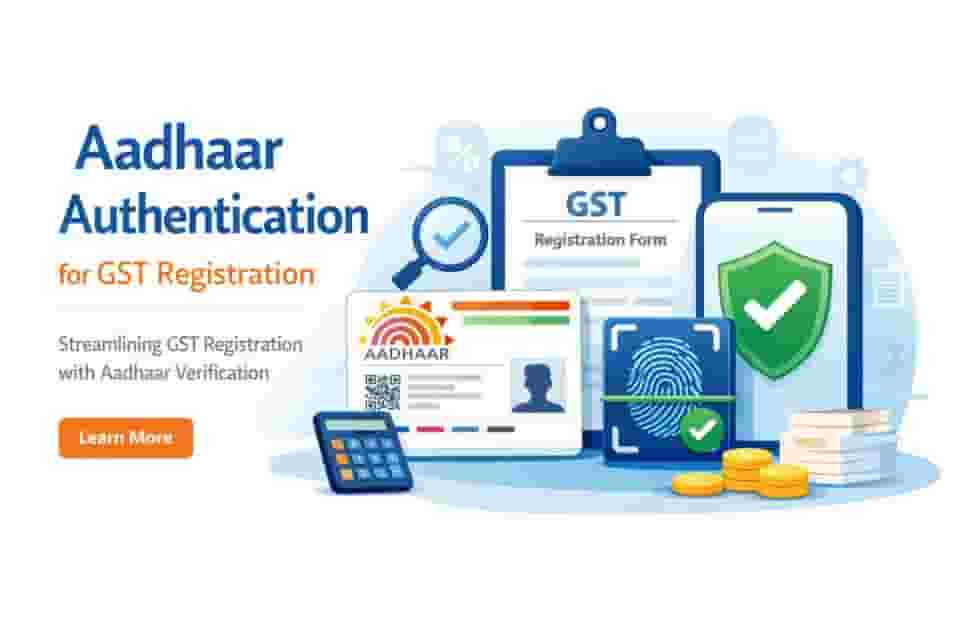
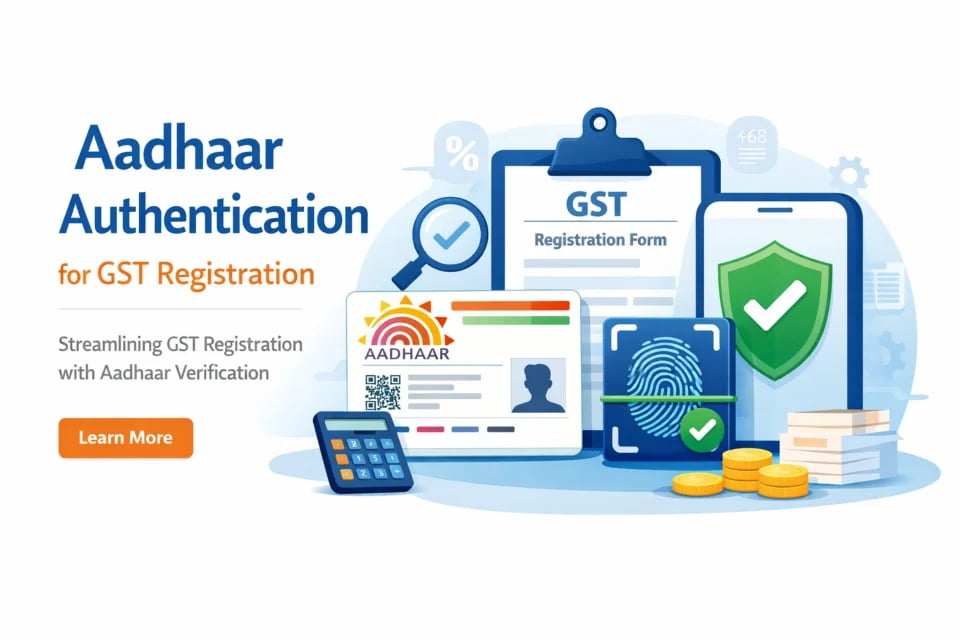
The government of India has added one more layer to the Goods and Services Tax framework, and that layer is called Aadhaar authentication, which was added in the GST system after the amendment of Rule 8(4A) of the Central Goods and Services Tax Rules. The authorities are working on creating a much more transparent and secure system by enabling real-time identity verification for people applying for GST registrations for their business models.
Along with enhanced security and credibility of the taxation system, the Aadhaar authentication procedure will also improve the procedural and administrative efficiency within the ecosystem of GST. It also aligns with the Indian government’s mission of becoming Digital Bharat, as Aadhaar authentication is carried out through online methods or biometrics.
Read the article to learn more about the specifics of GST Aadhaar verification, ranging from its meaning and benefits to the process of verification and relevant timelines.
Read More On GST Returns Under The GST Law Of India
Aadhaar Authentication For GST Overview
The table below summarises key details of Aadhaar authentication for GST registration that one should know about.
| Meaning of Aadhaar authentication | An official process wherein the Aadhaar details of the primary authorised signatory are cross-checked against the details in the official database. |
|---|---|
| Objective | To ensure only genuine people can apply for GST registration for their business entities, and to prevent fraudulent activities. |
| Legal base | Section 25 of the Central Goods and Services Tax Act and Rule 8 of the CGST Rules. |
| Methods of Aadhaar authentication for GST registration | OTP-based authentication or GST Biometric Verification. |
| Mandatory for | Authorised signatories, managing partners, and Karta of a Hindu Undivided Family. |
| Exempted categories | Non-resident taxable persons, foreign nationals, and individuals not eligible for obtaining an Aadhaar. |
Read More: New Aadhaar App & UIDAI Rule Changes- What You Need To Know In 2026
What Is Aadhaar Authentication For GST?
In simple terms, Aadhaar authentication is an official process that verifies an individual’s Aadhaar card number against the details stored in the official database, such as the Unique Identification Authority of India (UIDAI). In the context of GST registration, the Aadhaar details of the primary authorised signatory are cross-checked against the details in the official database through various forms and methods of verification, such as through the OTP mechanism or through GST biometric authentication, like fingerprint or iris scanning.
The main objective of carrying out Aadhaar authentication for GST framework is to improve the existing system and make it much more secure against fraudulent activities, like fake registrations and fake invoicing. By linking GST registration with a verified identity, it becomes easier for the government authorities to increase the credibility of the tax system and promote better compliance among entities. Along with strengthening the security of the GST tax system, the process of Aadhaar authentication simplifies the GST registration process as well.
GST Biometric Verification
As the instances of fraudulent and related criminal activities were on the rise, the Central Board of Indirect Taxes and Customs (CBIC) introduced the biometric system for Aadhaar authentication in the year 2024, and it was added in the GST system after the amendment of Rule 8(4A) of the Central Goods and Services Tax Rules.
For successful biometric verification, individuals are required to visit the designated centres and get their biometrics scanned, after which their information will be cross-checked, and the Aadhaar verification will be marked clear if the information matches.
Legal Framework Governing Aadhaar Authentication For GST
The Central Goods and Services Tax (CGST) Act lays the foundation for Aadhaar authentication, specifically sections, like Section 25, along with Rule 8 of the CGST rules, giving the government authority to mandate the process of Aadhaar verification, through various ways, like GST biometric verification. The process of verification was introduced back in the year 2020, and since then, it has been going through changes to keep the system updated and equipped against people with ill intent.
Objectives Of Aadhaar Authentication For GST
There are several objectives of carrying out the process of GST Aadhaar verification, some of which are laid down below in brief points for one’s reference:
-
One of the main objectives of the Aadhaar authentication procedure is the verification of the identities of individuals applying for GST registration of their business entities. The verification procedure ensures that the individual’s details match their information stored in the national government databases to allow only authenticated people to have GST registrations. This helps in creating a trusting database of taxpayers who abide by the law.
-
There are innumerable instances of fake GST registrations wherein unauthorised companies or organisations issue fake GST invoices, apply for claiming input tax credit, etc. To reduce such instances, Aadhaar verification comes to the rescue, as after this kind of verification, it becomes very hard and complex for fraudsters to devise new ways of fraud.
-
The Aadhaar verification process also deters people from engaging in activities related to tax evasion or non-compliant behaviour with the provisions of the law. Here, the objective is to imbibe and promote compliance among taxpayers and create a disciplined taxation system.
-
As the government of India is focused on shifting the operations of multiple departments from the traditional paper-based system to the digital system, Aadhaar authentication falls exactly in line with that bigger aim of digital governance by integrating GST with India’s digital identity system.
Read More On GST Offences & Penalties In India Complete 2026 Guide
Benefits Of Aadhaar Authentication For GST
Completing the Aadhaar authentication process comes along with several benefits. Some of the major benefits that it attracts are as follows for one’s clarity:
-
One of the most popular benefits of carrying out successful Aadhaar authentication for GST registration is the speed it adds to the registration process. After successful identity verification, the GST registration of business entities is processed much faster and quicker compared to those who keep the process pending.
-
In the absence of Aadhaar authentication, GST officers are required to verify through alternative ways, mostly needing physical verification, which takes a lot of time; however, this gets eliminated when one successfully goes through the Aadhaar verification procedure, making it hassle-free for both the applicants and the authorities.
-
Another benefit that is associated with conducting the GST Aadhaar verification process is the simplified document process. As identity-related details are verified directly from the Aadhaar database, applicants are not required to submit multiple proofs of identity, which reduces paperwork for both parties involved.
-
The whole process of Aadhaar verification makes the system much more transparent, wherein every taxpayer is registered, identifiable, and traceable. This helps in building trust and also enhances the credibility of the GST framework in the eyes of the taxpayers.
For Whom Is Aadhaar Authentication For GST Mandatory?
Aadhaar verification is made mandatory for certain categories, such as people who are crucial in the smooth management and operations of a business entity, as per Section 25(6) of the Central Goods and Services Tax Act and Rule 8 of the CGST rules. The categories for whom the Aadhaar verification is mandatory are as follows:
- Authorised signatories of all types.
- Managing or authorised partners of a partnership firm.
- Karta of a Hindu Undivided Family (HUF).
Exempt Categories Under Aadhaar Authentication For GST
There are some categories for whom conducting the process of Aadhaar authentication for GST registration is not mandatory, such as:
- Non-resident taxable persons.
- Foreign nationals.
- Individuals who are not eligible to obtain an Aadhaar.
For these exceptions, alternative methods of verification are used, such as document-based Know Your Customer (KYC) or physical verification of the principal place from where the business entity operates.
How To Complete Aadhaar Authentication For GST?
The GST registration Aadhaar verification process is a meticulous process that needs to be done carefully and accurately. The GST Aadhaar verification process is broken down in steps below for one’s better understanding and clarity:
Step 1: Applicants are required to visit the official website of Goods and Services Tax. Fill out the required information in Part A and then move forward with Part B of the GST REF-01 form.
Step 2: As soon as the applicant carefully fills out the form and submits it, the system automatically sends an email to the applicant’s registered email address with either a link for One-Time Password (OTP) Aadhaar authentication or a link for GST biometric authentication appointment. Please note that the link is valid only for a limited period of time.
Step 3: One can choose either of the options based on their preference and convenience. If selecting the OTP-based verification method, the Aadhaar number is to be filled, after which an OTP will be sent to the registered mobile number. Submit the correct OTP and complete the verification in just a few taps.
Step 4: However, if you’re selecting the GST biometric authentication appointment method, schedule a visit with the designated GST Suvidha Kendra (GSK). Gather all the required documents before visiting the Suvidha Kendra and complete the verification process with the help of the employees working in the GSK.
Step 5: If the Aadhaar authentication is successful, the system generates an ARN (Application Reference Number) after which the application moves forward to the next stage. ARN does not get generated if any of the following mistakes occur:
- Partners failed to visit the Suvidha Kendra on the scheduled appointment date.
- Failure of biometric authentication.
- Incomplete document verification within 15 days of submission of the request.
- Submitted details in the form are incorrect, like the Aadhaar card number, date of birth, etc. In these instances, applicants are required to correct the details within 15 days.
Alternate Process If Aadhaar Authentication Fails
If an individual does not complete the process of Aadhaar authentication of their business, or they do, but the verification remains incomplete for some reason, they can still go forward with the process of GST registration. However, please note that in such scenarios, the GST officer will conduct his own physical verification of the registered address of the business entity (also done when the individual does not have an Aadhaar). Along with this, the GST officer may also verify the documents of the primary authorised signatory and one partner with written approval from a Joint Commissioner.
Timelines That One Should Keep In Mind
The Goods and Services Tax guidelines mention specific timelines concerning Aadhaar authentication for GST registration. If any business entity applying for GST registration does not complete the process of Aadhaar verification, they will receive a notice in the form of GST REG-03 within 30 days of their submission of their applications for GST registration by the GST officer. Following this, they are then required to rectify what needs to be done using the GST REG-04 form within the next 7 working days.
If the GST officer is satisfied, they issue the GST registration certificate, and if not satisfied, they reject the application using form GST RED-05. Also, please note that in case one never receives a follow-up response from the GST officer, the application is considered approved.
What Are The Consequences Of Not Complying With The Aadhaar Authentication Process?
It is advised to all those business entities that aim to have GST registration certificates to comply with the Aadhaar verification process and adhere to all its related timelines. However, those who don’t will have to face certain consequences, some of which are described below for one’s reference:
-
One of the most immediate consequences of not completing the Aadhaar verification process is delays in the approval of GST registration of a business entity. In cases of non-compliance with the verification process of Aadhaar, the application for GST registration is flagged for a more detailed verification, which requires more time, resulting in delays.
-
When one completes the Aadhaar verification, they don’t have to submit several other proofs of identity, as the verified Aadhaar is enough. However, those who don’t will have to carry and submit additional proof of identity, address, and other required records. The verification of these many documents also takes a lot of time and hence leads to more unprecedented delays.
-
One of the most serious consequences of not complying with the verification procedure involving Aadhaar is the potential rejection of the GST registration application of one’s business entity. This rejection can damage the business’s planned activities and strategies, and the individual will have to start the application process all over again.
-
Even if such people who have not done Aadhaar verification get GST registration certificates for their business, they will always be under high surveillance and scrutiny, and surprise inspection visits from tax officials, extreme checking of filed returns, etc., are likely.
Also Read: Choosing the Wrong GST Type Can Cost You – Learn All Types Now
Conclusion
The Aadhaar authentication procedure has turned out to be very crucial for enhancing the security, transparency, and efficiency of the Goods and Services Tax registration process. By integrating such a strengthening process of identity verification, the government authorities are working on addressing the long-standing issues of fake registrations, fake GST invoices, and wrongful claims of input tax credit. The verification via Aadhaar will allow only verified individuals to get GST registration for their business entities.
Along with this, the whole process of Aadhaar authentication is expected to simplify tax compliance for genuine taxpayers by reducing certain burdens from their shoulders, like complex documentation requirements, the need for physical verification, etc. The overall verification procedure will not only make the Indian taxation system better, but the identity verification system better and faster too.
So, our suggestion is for you to stay compliant and legal, and grow your business in a safe way. If you wish to void all rejection, penalties, and suspicions of fraud from your business and ventures, complete your Aadhaar Authentication for GST today!
Stay updated with Jaagruk Bharat to get the latest information on government schemes and more, and reach out to us via our community page if you have any questions.
Why Choose Jaagruk Bharat To Complete Your GST Registration?
Allow Jaagruk Bharat to help you and apply for GST registration on your behalf in just a few clicks! Get 24/7 support, expert assistance, online services, and a hassle-free application Process with Jaagruk Bharat.
0

0

1k

0
0
1k Views
0

No comments available


Our Company
Home
About
T&C
Privacy Policy
Eula
Disclaimer Policy
Code of Ethics
Contact Us
Careers
Cancellation & Refund Policy
Categories
Women
Insurance
Finance
Tax
Travel
Transport & Infrastructure
Food
Entertainment
Communication
Government ID Cards
E-commerce
Traffic guidelines
Miscellaneous
Housing and Sanitation
Sports
Startup
Environment and Safety
Education
Agriculture
Social cause
Employment
Disclaimer: Jaagruk Bharat is a private organization offering support for documentation and government scheme access. We are not affiliated with any government body. Official services are available on respective government portals. Our goal is to make processes easier and more accessible for citizens.
All Copyrights are reserved by Jaagruk Bharat